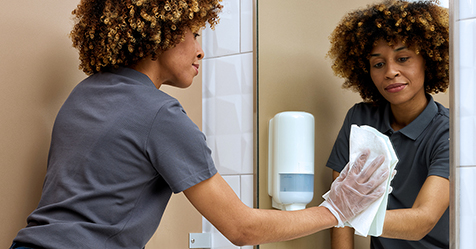
Workers Most Often Identify Restrooms as the Dirtiest Area
Most workers have avoided a workplace restroom at least once because of its condition
October 6, 2026
RamClean surveyed 1,000 full-time U.S. workers who spend at least three days a week at a physical workplace. Overall, 91% described their workplace as somewhat or very clean.
Yet 74% have avoided a workplace restroom because it was dirty. More than four in 10 have cleaned their own desk or workspace because they did not trust the cleaning crew. Nearly one in four said they have little or no trust that their workplace cleaning crew does a thorough job.
Those answers point to an important distinction: a workplace can look clean overall while still having problem areas employees notice every day.
Restrooms, breakrooms, floors, shared appliances and individual workspace all came up in the survey. While these areas are not necessarily noticed by someone when they first walk into a building, they are the areas employees use repeatedly.
The RamClean survey found:
- 43% have cleaned their own desk or workspace because they did not trust the cleaning crew
- 24% have little or no trust that their workplace cleaning crew does a good, thorough job.
- 21% have brought their own cleaning supplies to work.
- 68% have gotten a bad impression of an employer because of a dirty office or restroom.
- 48% would seriously think twice about taking a job or turn it down after seeing a visibly dirty restroom during an interview.
- 97% said a cleaner and healthier workplace would influence their choice between two otherwise similar jobs.
- 24% think a dirty workplace has made them sick or suspect it might have.
- 46% said workplace cleanliness affects their ability to focus, at least somewhat.
- 69% said workplace cleanliness would affect whether they stay at a job or leave one.
- 24% have complained to a boss or human resources about cleanliness, and for nearly half of them, nothing changed.
More than half of respondents, 54%, described their workplace as very clean. Another 37% said it was somewhat clean. Only 5% described their workplace as somewhat or very dirty, while 4% said it was neither clean nor dirty. On its own, that sounds encouraging. But when we asked about specific areas and experiences, a different picture emerged. In total, 66% of respondents had taken at least one of the actions listed in the survey because their workplace felt dirty.
When respondents were asked to choose the dirtiest spot in their workplace, restrooms came first at 29%. Shared microwaves and other breakroom appliances came next at 19%, followed by carpets and floors at 17%.
Other areas workers identified as the dirtiest included shared refrigerators (11%), elevator buttons and door handles (9%), desks and keyboards (8%), other locations (4%) and meeting rooms and shared equipment (3%).
Only 26% of respondents said they had never avoided a restroom at work because it was dirty. Another 32% had done it once or twice. About 32% also said they sometimes avoid dirty workplace restrooms, while 9% said they do it all the time. Taken together, 74% of workers have avoided a workplace restroom because of its condition at least once.
The survey results noted some differences in restroom usage between workplace types. Among healthcare workers in the survey, 81% had avoided a dirty workplace restroom. The figure was also 81% among factory and industrial workers and 73% among office workers.
Restrooms are one of those areas where even a relatively small cleaning problem is obvious. Odors, dirty fixtures, empty supplies, overflowing waste or floors that need attention can change someone’s impression of the space very quickly.
Sponsored Articles