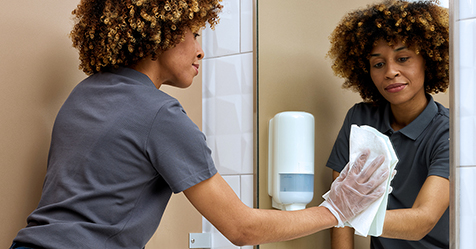
Bipartisan Bill Strengthens EPA’s Safer Choice Program
Safer Choice Program has never been authorized by Congress
Last week, Senators Chris Coons (Democrat-Delaware) and Jon Husted (Republican-Ohio) introduced the Safer Choice Program Authorization Act (SCPAA) to authorize and strengthen the Environmental Protection Agency’s (EPA) voluntary Safer Choice Program. The bill authorizes US$6 million annually from fiscal years 2028 through 2034 to support program operations.
The Safer Choice Program helps consumers, businesses, schools, and institutions identify cleaning chemicals and other products that meet rigorous standards for human health, environmental safety, and performance.
The SCPAA codifies EPA’s long-standing Safer Choice and Design for the Environment Programs, which have helped drive innovation in safer chemistry for decades while providing consumers and institutional purchasers with a trusted federal label for safer products. The Safer Choice and Design for the Environment programs have operated successfully for more than 30 years under administrations of both parties but have never been formally authorized by Congress. The SCPAA would provide statutory certainty for these widely used programs and the stakeholders that depend on them.
“This legislation provides long-term certainty for manufacturers so they can invest in safer chemistry, and so Americans can continue to lead in innovation,” said Senator Coons, co-chair of the Senate Chemistry Caucus.
“Our bipartisan bill would support and authorize this important program while expanding consumer choice in their everyday products,” Senator Husted said.
The bill would:
- Formally authorize EPA’s Safer Choice Program.
- Maintain rigorous, science-based standards for participating products.
- Strengthen protections against conflicts of interest in product reviews.
- Ensure continued maintenance of EPA’s Safer Chemical Ingredients List.
- Support transparency, stakeholder engagement, and public access to safer product information.
“The EPA Safer Choice Program has spent decades being the stamp of approval for cleaning products that are both high-performing and safer for people and the environment,” said John Nothdurft, Vice President of Government and Public Affairs, ISSA, the association for cleaning and facility solutions. “This bill gives manufacturers the certainty to invest, gives purchasers a trusted federal benchmark, and gives the American public confidence that the products used in cleaning their schools, hospitals, and workplaces meet a rigorous, science-based standard. ISSA strongly supports this legislation and urges Congress to act.”
Any organization involved in the value chain and decision making for EPA Safer Choice products can contribute their stories using the form on the Making Safer Choices website here.
Texas Health Officials Offer Precautions After Bovine Screwworm Case Confirmed
The Texas Department of State Health Services (DSHS) is alerting Texans to the presence of New World screwworm (NWS) in the state following confirmation of an NWS detection in a bovine in Zavala County. The three-week-old affected calf was found with larvae from the parasitic fly in its umbilical area. New World screwworm flies have been moving north through Mexico since they were first detected there in November 2024.
NWS flies were endemic in Texas and many southern states until their eradication from the U.S. mainland in 1966. NWS flies are endemic in Cuba, Haiti, the Dominican Republic, and parts of South America. The current outbreak is considered to have begun in Panama in 2022, with the flies migrating north since that time. NWS flies are now present in all countries of Central America and much of Mexico.
The larvae of the parasitic fly primarily infests livestock, pets, wildlife, and other warm-blooded animals, including, in rare cases, people. NWS flies lay eggs on or near open wounds and body openings, such as the eyes, ears, nose, mouth, or genitals. When the eggs hatch, the larvae burrow into and feed on the living tissue of the mammal, which can cause severe harm and even death.
While not common in people, if you notice a suspicious lesion on your body or suspect you may have contracted screwworm, seek immediate medical attention.
“DSHS and other state agencies have worked closely with the federal government and local partners to monitor the screwworm fly as it made its way toward our southern border,” said Imelda Garcia, MPH, DSHS chief deputy commissioner. “Now with confirmation of its presence in South Texas, we ask all healthcare professionals and clinicians to be on the lookout for NWS larvae infestations in their patients and to alert their local health departments immediately if they suspect a screwworm case.”
Providers should consider NWS in patients who have traveled in areas with animal or human cases of NWS and who suffer from a painful, foul-smelling wound containing visible larvae. Deep wounds with extensive tissue damage are also evidence of larval infestation, even if no larvae are seen on initial examination. There is no human-to-human transmission of NWS infestation.
Texans may be at risk if they live in areas where the flies are present and they spend a lot of time outdoors during the day. Sleeping outdoors and working or living with animals near reported NWS fly populations are also risk factors. Because any break in the skin can attract NWS flies, open wounds of any size should always be cleaned and covered.
EPA-registered insect repellents are also recommended when outdoors in areas where the flies are present. Wearing loose-fitting, long-sleeved shirts, pants, and socks will also limit the areas where scrapes or insect bites may occur. Clothing should be treated with a 0.5% permethrin insecticide.
Anyone who sees or feels larvae in a wound should cover the wound and contact their healthcare provider immediately. Larvae should only be removed by a healthcare provider to prevent further tissue damage and illness. Do not attempt to remove or dispose of eggs or larvae yourself.
The food supply in Texas is safe from screwworm. Current state or federal meat inspectors examine each animal to ensure they do not have signs of disease or pests, including screwworm.
Additional resources include:
- DSHS Regional Zoonosis Control offices
- New World Screwworm (NWS) | Texas DSHS
- Center for Disease Control and Prevention’s NWS webpage
- Texas Animal Health Commission’s information on reporting and responding to NWS in animals in Texas
- Stop Screwworm: Unified Government Response to Protect the United States