Seniors Plan to Rejoin the Workforce in 2026
One in eight seniors have already returned to work or plan to rejoin the workforce in 2026
February 2, 2026
A growing share of older Americans are delaying retirement or returning to work, according to a new ResumeBuilder.com survey of U.S. seniors ages 65 and older. The survey, conducted in December 2025, follows ResumeBuilder’s 2023 and 2024 studies on seniors rejoining the workforce and shows the trend is continuing into 2026.
Key findings include:
- One in 10 seniors don’t plan to retire until 2030 or later.
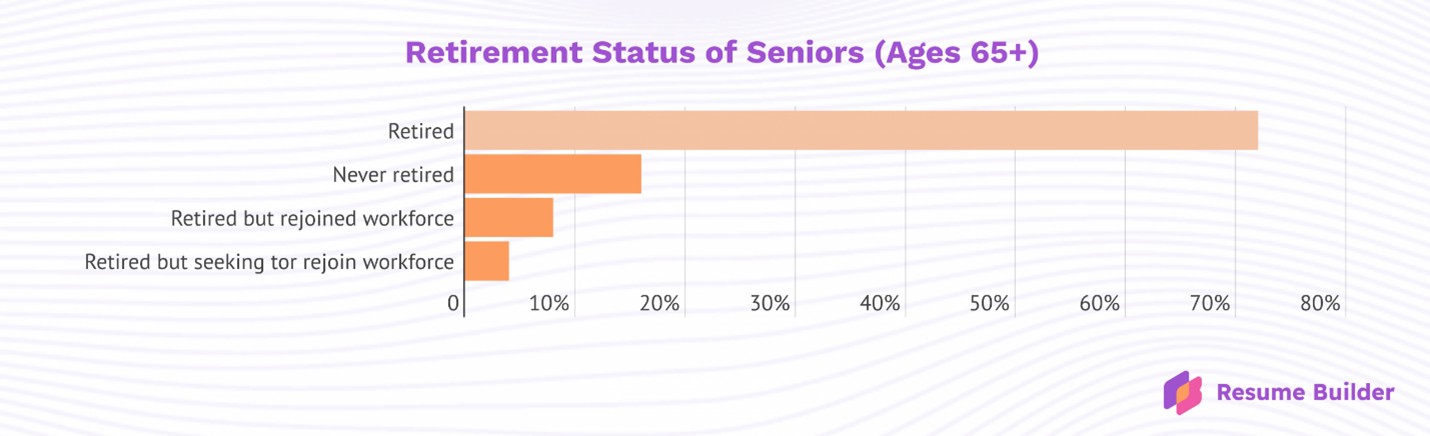
- Nearly 1 in 8 seniors have already returned to work or plan to rejoin the workforce in 2026, including 16% who say they never retired.
- More than half of seniors say financial concerns are influencing their decision to work.
- Most seniors who plan to keep working expect to do so part-time.
Among those who reentered the workforce, most did so before 2024 (74%), while 13% returned in 2024 and another 13% returned in 2025. Additionally, 4% of seniors report that they are currently applying for jobs with plans to reenter the workforce. Meanwhile, 16% said they have never retired, indicating that a notable share of seniors have continued working without ever fully leaving the labor force.
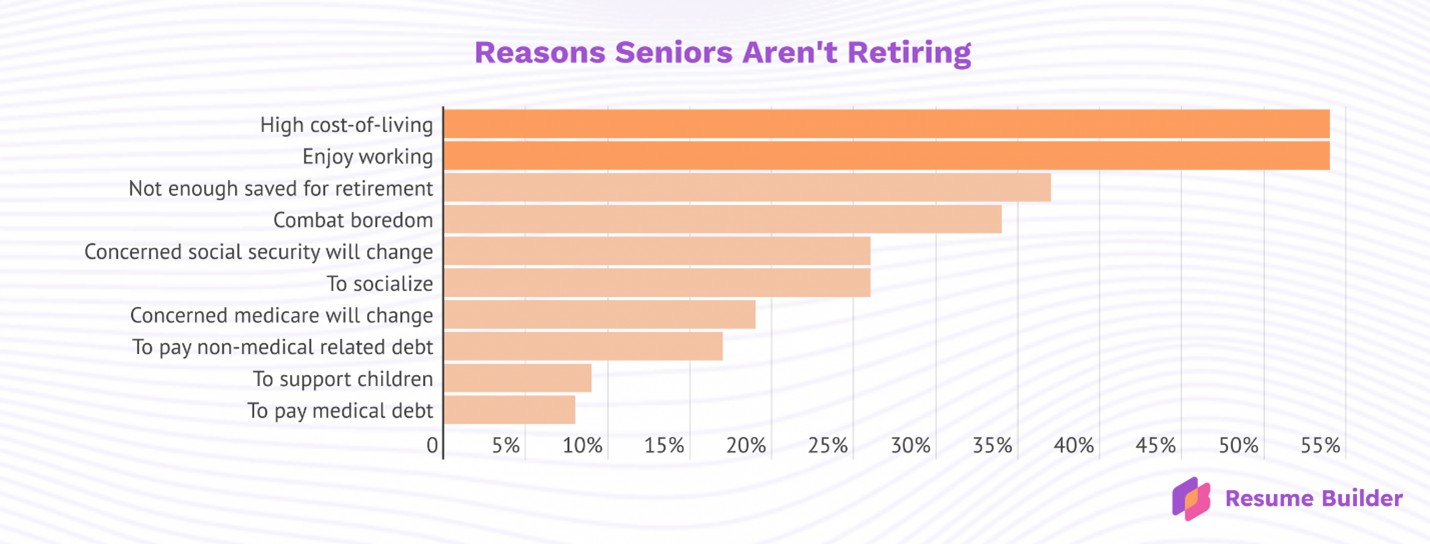
When asked why they are continuing to work or returning to work, seniors most cited enjoying work (54%) and the high cost of living (54%). Financial insecurity also played a role as 37% said they have not saved enough for retirement. Other reasons included combating boredom (34%), concerns about potential changes to Social Security (26%), and worries about changes to Medicare (19%).
“For many seniors, retirement has become more flexible than final,” said Stacie Haller, ResumeBuilder.com’s chief career advisor. “…Today’s workplace offers far more flexible opportunities for older professionals. Remote and hybrid roles, part-time work, and project-based positions make it easier for seniors to stay engaged on their own terms. For many, continuing to work isn’t about necessity, it’s about purpose, connection, and simply enjoying the work itself.”
One in three seniors also won’t retire this decade. While 6% said they plan to retire by the end of 2025, 15% expected to retire in 2026, and 23% in 2027. Another 13% said they do not plan to retire until 2028, and 9% until 2029. The largest share, 34%, said they do not plan to retire until 2030 or later.
Among those planning to continue working, 58% expected to work part-time, while 42% plan to work full-time, suggesting many seniors prefer a gradual transition rather than a full-time return to work.
“For many, this stage of life becomes an opportunity to finally pursue work they’ve always been interested in, launch a long-considered business, or shift into more meaningful projects,” Haller said.
She also added that many seniors want to stay mentally and socially engaged, as well as maintain financial security. She noted that retirement today is less about stepping away and more about working with intention and choice.
Latest Articles
Sponsored Articles