Restrooms are among the most heavily used spaces in commercial, institutional, and public facilities. From airports and schools to office buildings and healthcare environments, they operate continuously, supporting hygiene, comfort, and well-being for millions of people every day. Because of this high-level use, restrooms represent a powerful opportunity to reduce environmental impact while maintaining the highest standards of cleanliness and performance.
A truly sustainable public restroom strategy balances hygiene, resource efficiency, operational performance, and user expectations through a practical, system-based approach. By evaluating consumables, dispensing technology, cleaning practices, and maintenance routines, organizations can achieve measurable environmental benefits without compromising reliability or user experience.
Reducing resource consumption
Paper consumption, water usage. and waste generation are central to restroom sustainability. In high-traffic environments, even small improvements, when applied consistently, can deliver meaningful results at scale.
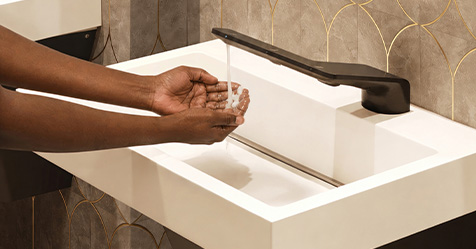
Optimized dispenser systems, for example, help control paper usage by delivering the right amount of product at the right time. Touch-free dispensing technology not only supports hygiene expectations but can also reduce overuse. In fact, surveys show that 80% of Americans consider touchless fixtures important in public restrooms.
Product performance also plays a critical role. Durable, highly absorbent paper products help reduce overall consumption per visit, supporting both environmental and operational efficiency.
Responsible sourcing, smarter manufacturing
Sustainable restroom strategies extend beyond what happens inside the facility. The methods by which raw materials are sourced and paper products are manufactured significantly influences their overall environmental footprint.
Standard restroom tissue is often produced using virgin fibers—typically a mix of hardwood and softwood—which can contribute to deforestation, higher water consumption, and increased carbon emissions. More sustainable alternatives include 100% biodegradable, septic-safe options with adaptable sheet sizes that help minimize waste.
Biodegradable products are often packaged with less plastic and manufactured using fewer harsh chemicals, such as bleaches, dyes, or fragrances. Many are also engineered to disperse quickly upon contact with water, reducing the risk of clogs and improving system performance. Some biodegradable toilet paper products can break down up to four times faster than standard options.
Plastic reduction is another critical priority. Each year, an estimated 19 to 23 million tons of plastic waste enters aquatic ecosystems worldwide. One-way facilities can support circularity is by choosing dispensers made from recovered ocean plastic. When paired with smart dispensing technology that delivers measured quantities per use, these systems help reduce waste, lower water usage, and decrease restocking frequency, benefiting both the environment and day-to-day operations.
Equally important are manufacturing processes that prioritize energy efficiency and emissions reduction. Many paper manufacturers now invest in cogeneration, biomass, and renewable energy sources such as solar power. Certifications from independent third parties, including the Forest Stewardship Council (FSC®), Programme for the Endorsement of Forest Certification (PEFC) and FSC® Controlled Wood, further support responsible forest management and transparent sourcing.
Sustainable cleaning practices
Cleaning chemicals play a significant role in restroom sustainability and environmental quality. Many conventional cleaners contain harsh ingredients that can negatively affect cleaning staff, building occupants and the environment. Studies have identified hundreds of volatile organic compounds (VOCs) in common cleaning products, many of which are classified as hazardous and linked to respiratory issues and other health risks.
Choosing less toxic, environmentally responsible cleaning solutions can improve indoor air quality while still meeting stringent hygiene standards. This approach supports healthier environments for both users and maintenance teams, without compromising cleanliness.
Sustainability through professional services
Professional cleaning and maintenance services can further enhance sustainable restroom operations. A top reason U.S. adults cited for skipping handwashing in a public restroom is a lack of soap and/or paper towels. Routine cleaning services not only ensure hygiene standards are met, but also manage the restocking of dispensers and supplies
By managing inventory more effectively, professional services help reduce excess stock, minimize packaging waste, and optimize labor efficiency. The result is a restroom environment that is reliably clean, well-supplied, and aligned with sustainability goals.
Hygiene and sustainability working together
The COVID-19 pandemic reinforced the essential role of hygiene in public spaces. While some organizations initially viewed sustainability as a competing priority, innovation in product design, materials, and dispensing technology has demonstrated that hygiene and sustainability can, and should, work together.
By taking a holistic view of restroom operations and treating hygiene, sustainability, and performance as interconnected priorities, organizations can reduce resource consumption, lower operational costs, and deliver clean, safe, and sustainable restroom experiences. This balanced approach reflects a broader commitment to responsible innovation, one that supports everyday hygiene while respecting the world we all share.