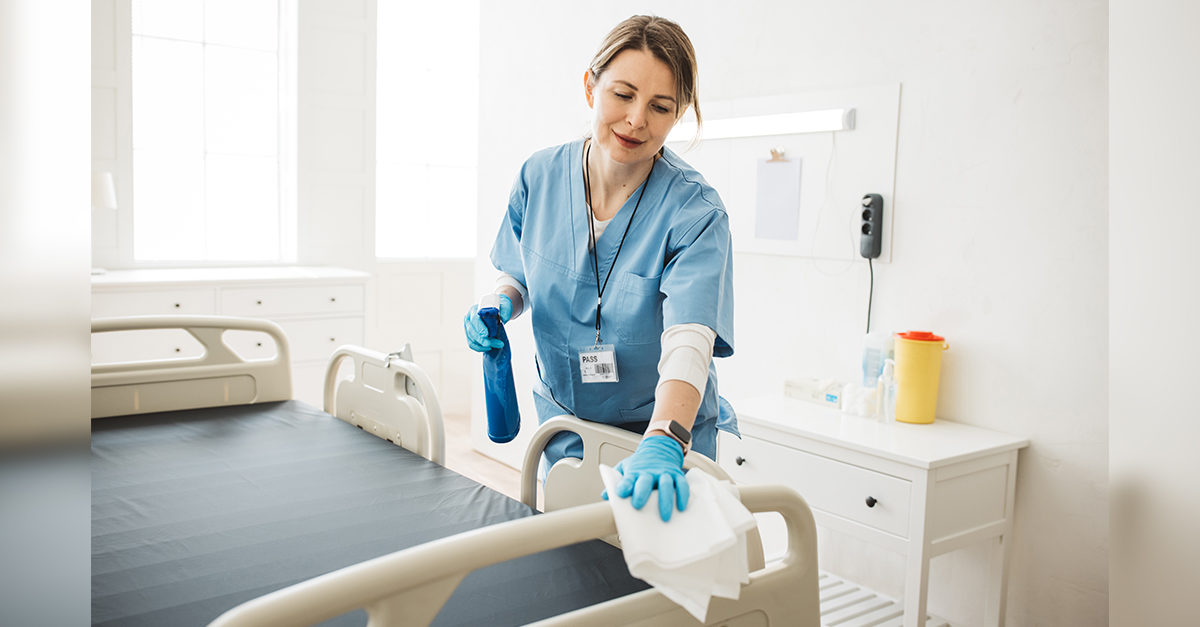
CMM spoke with Gregory Gardner, director of environmental services (EVS) at a Georgia hospital, about the critical role of EVS staff in preventing the spread of infectious pathogens in healthcare facilities.
How long have you been working in EVS?
Gregory Gardner: I have worked in environmental services for 15 years. I am currently the director of EVS at Memorial Hospital and Manor in Bainbridge, Georgia.
Which infectious diseases does your facility contend with the most this time of year?
Gardner: We see a lot of cases of norovirus, flu, and COVID-19 in the winter.
Which infections/pathogens are your facility most concerned about? Why?
Gardner: We are most concerned about the spread of C. diff, COVID-19, and the flu. Patients and visitors have numerous opportunities to spend time in common areas within the hospital, and that opens up the possibility of cross-contamination.
What cleaning protocols do your EVS teams follow to help prevent the spread of infectious diseases?
Gardner: Our daily cleaning protocols in patient rooms and public areas include wiping down high-touch surfaces, as well as surfaces closest to the patient. We clean waiting-room furniture, public restrooms, and high-traffic spaces multiple times each day. In addition, we perform blitz cleaning in various common areas of the hospital and manor, including sweeping; mopping; wiping down tables, chairs, walls, and vents; and dusting high surfaces.
Then we perform audits to ensure rooms are cleaned correctly and thoroughly and that soap and sanitizer dispensers remain stocked.
What is your facility’s top challenge regarding infection prevention?
Gardner: We have a problem with family members of patients who don’t follow instructions for infection control precautions. They do not feel that these precautions should apply to them and don’t understand the impact of not following the processes.
What are your biggest staff challenges?
Gardner: It is important that the EVS team perform its tasks consistently, focusing on safety and using personal protective equipment (PPE) correctly. To accomplish this, PPE requirements
must be in effect, including when patients leave the hospital or transfer to another facility. Staff must educate family members and visitors on the importance of PPE and enforce its use.
What are the most common misconceptions about infection prevention?
Gardner: Many people mistakenly believe their actions don’t affect infection prevention. In reality, the actions of everyone in the building affect infection prevention. For example, hand hygiene is essential, along with keeping each individual’s environment clean. Infection control is not just housekeeping’s job.