HR Leaders Express Optimism About 2026 Despite Changes Ahead

February 18, 2026

Human resources leaders, after experiencing a difficult 2025, are optimistic about 2026 despite bracing for challenges and more upheaval in the year ahead, according to a new Wiley Workplace Intelligence report.

Most (73%) of Wiley’s survey respondents felt optimistic about their organization’s future even though many are expecting significant challenges and continuing change in 2026 after a tumultuous 2025.

Culture and engagement appear to be the biggest areas of concern. Nearly a third of leaders each identify organizational culture improvement and employee engagement as top challenges for 2026. Both areas took a hit last year after workers experienced factors such as rapid change, instability, artificial intelligence (AI) adoption, and return-to-office mandates.

Respondents widely expect continued workplace upheaval this year after enduring a challenging 2025. Previous Wiley Workplace Intelligence findings showed many managers and employees suffered from significant stress and burnout during the past year as they dealt with near constant change, much of which stemmed from uncertainty and apprehension surrounding AI adoption. Only a small fraction of employees truly thrived.

The majority (66%) of leaders expect more change to occur in the year ahead, despite their general optimism. The research reveals that many employees lack confidence in their organization’s ability to adapt to change, creating a potential disconnect between leadership outlook and workforce reality.

“This optimism is real, but it’s also precarious,” said Wiley researcher Dr. Tracey Carney, who headed the study. “Leaders have a brief window in 2026 to convert that optimism into action by rebuilding trust, improving communication, and reinvesting in their people. Organizations that don’t seize this moment may risk letting it slip away.”

The findings suggest that communication will be a key element in any organization’s efforts to deal with change and improve. The majority (64%) of respondents report communication as the most important leadership skill.

Human resources and learning and development leaders also understand that dealing with AI will continue to be a big factor in the workplace in 2026. More than one third (35%) of respondents reported learning technology as a top priority in the year ahead.

Tags

Handwashing Habits in Public Restrooms Slip

One in five admit they are more likely to skip handwashing when no one else is around

February 18, 2026

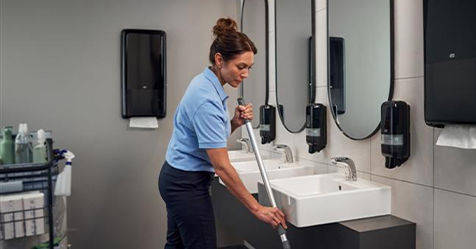
Most of Americans (70%) are very or somewhat concerned about contracting the flu compared to 59% who felt that way just three years ago, according to the Bradley Co. 2026 Healthy Handwashing Survey™.

That rising concern is translating into more diligent hand hygiene. The survey found that 81% of Americans said they wash their hands more frequently or more thoroughly during flu outbreaks and seasonal virus surges, up from 74% in 2023. Nearly all respondents (93%) believe handwashing is important to maintaining overall health, reinforcing its role as one of the most trusted and accessible ways to help reduce the spread of illness.

“Handwashing, using soap and warm water, is one of the simplest and most effective ways to reduce the spread of disease, including the flu,” said Dr. Brian M. Forster, microbiologist and chemical hygiene officer at Saint Joseph’s University. “Our hands touch many surfaces during the day, including our face, and are an easy way for us to pick up something that can make us sick.” 

The survey found that coughing, sneezing, or being around someone who is sick are the actions most likely to prompt handwashing. When feeling ill, Americans are most likely to drink more fluids, wash their hands more frequently, and stay home when possible.

 The survey also revealed handwashing habits often don’t last, especially in public restrooms, highlighting a growing disconnect between awareness and daily behavior.

Last year, 81% of Americans said they always washed their hands after using a public restroom. In 2026, that figure dropped to 76%. Additionally, more than three-quarters of Americans (77%) said they have seen others leave a public restroom without washing their hands, up from 68% in 2024. At the same time, one in five admit they are more likely to skip handwashing when no one else is around, underscoring the role social accountability plays in hygiene compliance.

“For many people, the decision to wash their hands in a public restroom is influenced by the environment,” said Jon Dommisse, Bradley Co. vice president of business development and strategy. “If a restroom appears poorly maintained or understocked, it can discourage proper handwashing—at exactly the moment when it matters most for public health.”

On average, Americans report washing their hands about eight times per day, but frequency varies widely. Women wash their hands about two times more each day than men, a long-standing pattern that continues to underscore the gap between awareness and everyday practice.

While lathering up with soap and water is the best way to wash hands, 44% of Americans admit to just rinsing with water. Men are more likely to bypass soap than women (50% vs. 38%).

Tags

Latest Articles

Green Cleaning Products 101
February 18, 2026 Stephen P. Ashkin

Green Cleaning Products 101

February 17, 2026 Doug McMurtrie

Don’t Fall into a Procedural Gap

February 13, 2026

U.S. Battery Celebrates its 100-Year History

Sponsored Articles

U.S. Battery Celebrates its 100-Year History
February 13, 2026

U.S. Battery Celebrates its 100-Year History

January 30, 2026

US 31DC XC2 12V Battery

January 30, 2026

US 305N XC2 6V Battery

Recent News

U.S. Janitorial Services Market Projected to Grow Nearly 2% in 2026

U.S. Janitorial Services Market Projected to Grow Nearly 2% in 2026

Three Factors Make or Break Employee Happiness

Supervisors Promoted for Front-line Success Show Lower Engagement