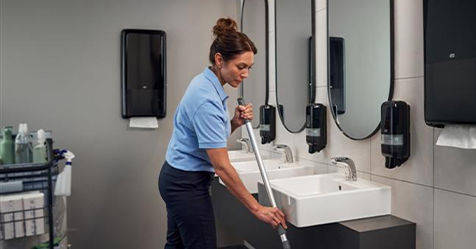
Three Factors Make or Break Employee Happiness

February 17, 2026

What makes workers happy? A new survey by recruiting firm Howdy.com polled nearly 1,000 full-time workers to find out; overall, 73% reported on-the-job happiness. 

Big differences:

  • Just 19% of happy workers disclosed burnout compared to 84% of unhappy workers who reported burnout.
  • Unhappy workers work an average of three more hours per week than their happy counterparts.
  • Happy workers overwhelmingly have clear job duties (95% versus 75%), a supportive manager (80% versus 51%), and clear ways to succeed in their roles (93% versus 52%).
  • Over one in four unhappy workers experienced workplace layoffs in the last six months.
  • 56% of happy workers have investment in their work, while 85% of unhappy workers consider work “just a paycheck.”
  • Only 25% of unhappy workers are satisfied with their pay, compared to 71% of happy workers.
  • 30% of unhappy workers believe their employer cares about them, versus 85% of happy workers.
  •  Recognition follows a similar pattern, with 85% of happy workers feeling recognized compared to just 44% of unhappy workers.

Off the clock, employees report huge differences as well: Only 40% of unhappy workers said they have work-life balance, and show lower numbers in exercise participation, participation in community beyond work, and long-term relationships.

The top three happiest job sectors were:

  • Nonprofit (90%)
  • Science and research (89%)
  • Construction and trades (82%)
Tags

U.S. Janitorial Services Market Projected to Grow Nearly 2% in 2026

Wages consume almost half of a janitorial business’s revenue

February 17, 2026

During the past five years, the janitorial services industry in the U.S. has expanded under intense competition and changing customer expectations, according to a new report from IBISWorld. Many new entrants rushed in to capture post-pandemic demand, causing establishment growth to outpace revenue and leaving providers to compete for contracts in a fragmented market. Clients, especially businesses, have pushed on pricing and treated cleaning as a cost center, even while requesting more frequent or specialized services. This has tightened the squeeze on service providers.

Additionally, higher labor costs have eroded profit as many companies struggle to pass on rising expenses. Revenue has grown at a compound annual growth rate of 2.7% during the past five years and is expected to reach US$112.0 billion in 2026, with a forecasted rise of 1.8%. The industry is forecast to grow 2.2% annually through 2031.

Commercial cleaning accounts for 82.3% of revenue ($92.2 billion), making it the backbone of the industry. Residential represents 7.3%, with the remainder split across damage restoration, exterior services, and specialty offerings.

The industry employs 2 million workers across roughly 1 million businesses, highlighting its scale and fragmentation. Profit margin averages 11.9%, but wages consume 43.2% of revenue, making labor the largest cost driver. Rising labor costs and aggressive buyer negotiation have squeezed margins in recent years.

The report also found that stringent cleanliness demands and tech innovations are reshaping the janitorial landscape, offering new growth avenues. Janitorial companies are aligning their services to these evolving norms while leveraging internet of things and robotics for enhanced efficiency. Additionally, climate concerns and consumer preference shifts are accelerating the push for eco-friendly cleaning products. Larger businesses are most likely to invest in green alternatives, while smaller providers may trim nonessential expenses to meet environmental standards and changing customer expectations.

Regionally, janitorial services are seeing a boom in the Southeast, thanks to the region’s growing population. With bustling urban centers such as Miami and Atlanta and a significant number of retirement communities in Florida, demand is high for routine cleaning and maintenance.

Tags

Latest Articles

Don’t Fall into a Procedural Gap
February 17, 2026 Doug McMurtrie

Don’t Fall into a Procedural Gap

February 13, 2026

U.S. Battery Celebrates its 100-Year History

February 13, 2026 Kathleen Misovic

Healthcare Hygiene and Cleaning Go High-Tech Against HAIs

Sponsored Articles

U.S. Battery Celebrates its 100-Year History
February 13, 2026

U.S. Battery Celebrates its 100-Year History

January 30, 2026

US 31DC XC2 12V Battery

January 30, 2026

US 305N XC2 6V Battery

Recent News

cleaners, cleaning staff, supervisor

Supervisors Promoted for Front-line Success Show Lower Engagement

Industrial Cleaning Solvents Market Projected to Grow 5.1%

Missouri and Nebraska Aim to Lower Minimum Wage for Minors