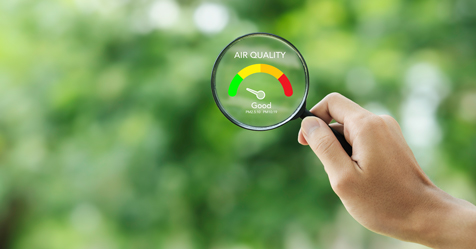
Cleaning and Maintenance Management’s Breathe Easy indoor air quality (IAQ) webinar examined the challenges of maintaining healthy indoor air from the perspectives of an environmental engineer, a respiratory health specialist and a facility operations leader. In an hour-long conversation complete with an audience participation Q&A, the IAQ specialists revealed the common causes of poor air quality, analyzed its effects on building residents’ health and discussed cleaning practices that can worsen and improve air quality.
IAQ effects on health
Poor IAQ is caused by microscopic particles and contaminants in the air, according to Sarita Ceron, an environmental engineer with CCMS-Custom Cleaning & Management Services. She added that air quality is also affected by temperature, humidity, moisture, gases and fumes inside a facility.
If you’re one of the 28 million Americans with asthma, contaminants in the air can trigger your asthma symptoms, according to Kenny Mendez, president and CEO of the Asthma and Allergy Foundation of America. Whether caused by contaminants or a lack of proper ventilation, poor IAQ can not only affect the health, but also the performance of building residents, said Paul Tisch, vice president of operations for SSC Services for Education, who recalled walking past a classroom and seeing all the students asleep at their desks because the facility managers had decided to shut off the ventilation system to save money.
Common air pollutants
Where do the contaminants and particles in the air come from? Mendez explained that common facility maintenance materials such as cleaning chemicals, paint and flooring can release fumes into the air.
Dust is another common indoor air contaminant, along with pollutants brought in from the outside such as pollen, smoke, construction materials, vehicle exhaust and cigarette smoke, added Ceron and Tisch.
Air monitoring tools are available for every budget. “I would highly recommend for anyone with limited funds in their maintenance toolbox to get a CO2 monitor to start with,” Tisch said. He listed particle counters as another option, along with devices to measure moisture and humidity to help stave off mold.
Ceron suggested gathering building resident feedback as to dust levels and absenteeism rates, to complement measurements recorded by devices.
Cleaning for air quality
The panelists cautioned against cleaning methods that can move dry dust around instead of removing it, such as dry sweeping, and using strong cleaning chemicals that can irritate sensitive individuals.
You probably want to use cleaning solutions that don’t throw off a lot of fragrance because that could be an irritant to someone who has asthma or allergies,” Mendez said. “And if you’re cleaning surfaces, such as vacuuming a carpet, you’d want to have a vacuum that has a HEPA air cleaner on it, one that is certified asthma- and allergy-friendly.”
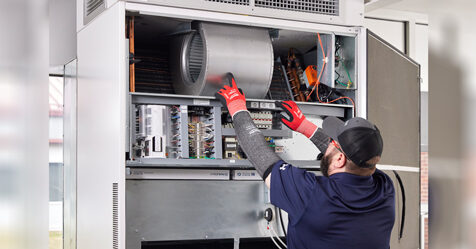
Mendez added that you can boost the effectiveness of your cleaning by incorporating energy-efficient systems into your facility, such as up-to-date HVAC systems with improved air filters. He urged facility managers to seek out federal programs and organizations that will assist in these upgrades by offering loans and other financial incentives.
Avoiding common mistakes
The panelists wrapped up the formal portion of the webinar presentation with cautionary tales of cleaning practices and maintenance negligence that can undermine IAQ, such as overlooked leaks that lead to mold growth, dust on high surfaces that is recirculated into the air and a lack of unison between facility departments that causes inconsistent processes. They emphasized the importance of training and recognizing the custodians whose actions make a difference.
“Reward those facility custodians who point things out,” said Tisch. “And if a maintenance tech sees a custodian doing something wrong, let’s not just point out the fact that they’re doing it wrong. Let’s educate [them].”
Ceron added that facility leaders sometimes mistakenly believe they need a large budget or additional staff to ensure good IAQ.
“For those folks who think [they] might have to make a really large investment or bring in an engineer, I would like to share with [them that] there are so many solutions and strategies to make your facilities and processes more efficient, from low-cost processes to the most advanced investments and technology,” she said. “Just think about the return on investment.”
Watch the full webinar below for more insights from the panelists.