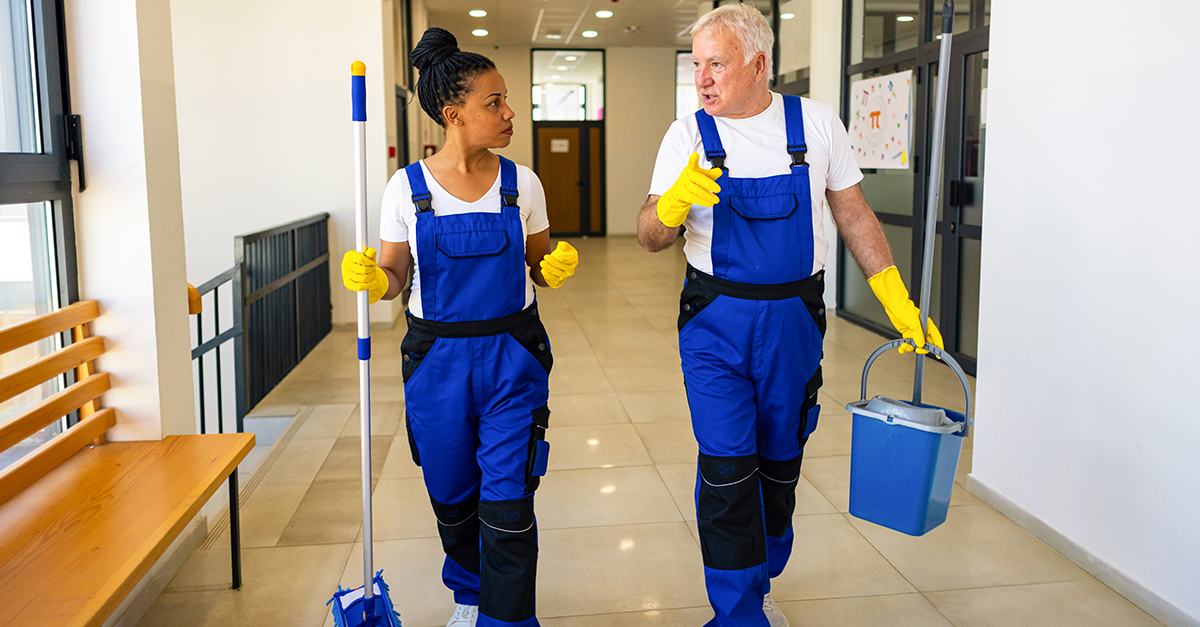
Today’s workforce is more generationally diverse than ever. In facility management, leaders guide employees who are just beginning their careers alongside team members who have spent decades building industry experience.
That mix can create challenges, but it also creates meaningful opportunities—stronger teams, broader perspectives, and more effective mentorship—when leaders know how to manage it well.
The mistake many leaders make is assuming every generation should be managed the same way. Successful leadership requires consistency in expectations while allowing flexibility in communication, motivation, and development. The standard should remain the same across the board, but the approach often needs to change depending on the individual employee and what drives them.
Generational differences
One of the biggest differences across generations is how employees engage with work itself. Understanding what influences each generation’s view of a satisfying career is key to leading them well.
Many experienced employees entered custodial and maintenance work because they genuinely enjoyed the work. They take pride in keeping buildings clean, solving problems, and creating environments where others can succeed. A career in facility management represents dependable, long-term work that provides stability and purpose.
Younger generations have grown up in a very different environment. Social media has reshaped how career success is presented, often celebrating visible, flexible, creative, or entrepreneurial roles instead of the steady, behind-the-scenes work that keeps every occupied space running. As a result, many younger employees spend their early career years exploring options, seeking growth, and looking for work that connects to a broader sense of purpose.
That purpose isn’t missing in facility management, but facility leaders need to communicate it more clearly to younger workers.
Long-term goals
Recognizing the differences among different generations of workers changes how leaders attract, retain, and encourage employees.
Younger employees often need a clearer understanding of the vision, not just for the role they are in today, but for their future roles. They need to see the pathways available in facility management and understand that this industry offers meaningful opportunities for advancement, leadership, and long-term career growth. They need to understand the drastic impact facility maintenance has on every other industry. Without clean, maintained spaces, every school, event venue, stadium—any commercial building—wouldn’t function.
Experienced employees may connect to the work more naturally, but leaders can still help them see their role in a new way. Rather than viewing custodial or maintenance work as a paycheck or a path to retirement, they can be encouraged to see themselves as mentors, leaders, and experts whose experience can shape the next generation of the industry.
Starting a conversation about long-term goals can begin before an employee is hired. One simple interview question can reveal a lot: Where do you see yourself in this role in three months?
For younger candidates, this question opens the door to discussing growth paths and sparks interest in what the role could become. For more experienced candidates, it communicates that the organization sees their potential, values their motivation, and is ready to connect their strengths with future opportunities.
Personalized leadership
Once an organization’s team is in place, managing the team’s multigenerational members requires intention.
Younger employees, who are accustomed to quick content, fast feedback, and immediate results, may benefit from more frequent check ins, clear instructions, and consistent follow-up. More experienced employees may adapt to the physical or operational aspects of the role more quickly, but they may need additional support when new technology, systems, or digital tools are introduced.
The goal is not to lower expectations for one group or raise them for another. The goal is to lead people in a way that helps them meet the same expectations successfully.
Cross-generational mentorship
Creating an environment where cross generational mentorship happens naturally is an effective strategy for harnessing workers’ strengths.
Experienced employees can help younger team members develop professional traits such as consistency, workplace awareness, and pride in the job. Younger employees can often support experienced team members with new technology and digital communication tools.
Mentorship doesn’t require a structured program; it simply requires a wide array of ages and backgrounds working together consistently—something that happens naturally within facility management. The strongest teams are often those in which these relationships develop organically. When leaders create a culture of respect and shared learning, mentorship becomes part of the team dynamic rather than a formal requirement.
Communication adaptations
Communication might be where generational differences show up most clearly.
Younger employees are often more comfortable communicating through text, email, or messaging platforms. Older generations place greater value on face-to-face conversations and direct interaction. Neither approach is wrong; both reflect the world people grew up in.
Leaders need to understand how communication preferences impact trust, accountability, and workplace relationships, and be ready to adapt in either direction based on the situation.
Context matters. Forcing face-to-face communication on a young worker who prefers quick email check-ins may strain the business relationship. At the same time, neglecting in-person meetings with an older CEO may create confusion and contention.
Experienced leaders cannot assume that the methods that worked in the past are the only methods that work today. Younger employees still need opportunities to build interpersonal communication skills, especially as they grow into leadership roles. However, older employees and seasoned leaders must learn to adapt to faster, more digital, and more flexible communication styles.
Individuality over stereotypes
Managing multiple generations successfully comes down to understanding people as individuals. It’s easy to let generational stereotypes cloud your perspective, but across every generation, employees still want many of the same things: respect, opportunity, and support. They just have different ideas of what these values encompass and how to achieve them.
Leaders can effectively manage multigeneration teams by adjusting their communication style, development approach, and leadership methods while maintaining clear expectations and accountability.
The workforce will continue to evolve, and leadership must evolve with it. Instead of considering generation diversity a challenge to overcome, successful organizations will recognize it as an opportunity to build stronger, more balanced teams and inspire future leaders.