When Doug Hoffman, the executive director of the National Organization of Remediators & Microbial Inspectors (NORMI) talks about air quality, he doesn’t start with products. He starts with science, and the limits of how people evaluate that science.
Hoffman, who has spent decades working in air purification and indoor environmental quality, opened a recent roundtable discussion aboard the Carnival Horizon, the venue of a Restoration Journeys and NORMI Caribbean cruise, by pointing out a frustration shared by a growing number of medical professionals: the gap between clinical study results and real-world performance.
“Clinical studies will tell you one thing about how something might work in a specific setting, like an air purifier in an eight-by-eight box,” Hoffman said. “But that doesn’t tell you anything about how it will work in the actual environment in somebody’s house.”
That distinction between controlled clinical testing and real-world field studies is at the heart of what Hoffman said a medical board he works with is now focusing on—evaluating whether technologies work based on case studies and field results rather than laboratory conditions alone.
Only five technologies
Despite the sprawling variety of air purifiers on the market, Hoffman said every single one of them uses some combination of just five technologies: filters, ionizers, ozone generators, ultraviolet light, and ultraviolet light with a target plate—the last of which is known as photocatalytic oxidation, or PCO.
“If you know what those five technologies are, it doesn’t matter what the air purifier is,” he said. “You know exactly what it does. You know the pros and cons.”
The deeper organizing principle behind those five technologies, Hoffman said, is the distinction between passive and active approaches.
Passive technologies, primarily filters, work by pulling contaminants toward the solution. You must get the pollution to the filter. If air doesn’t reach it, it doesn’t get cleaned. Active technologies, like ozone, do the opposite. They push the solution out to the pollution.
The problem with filters
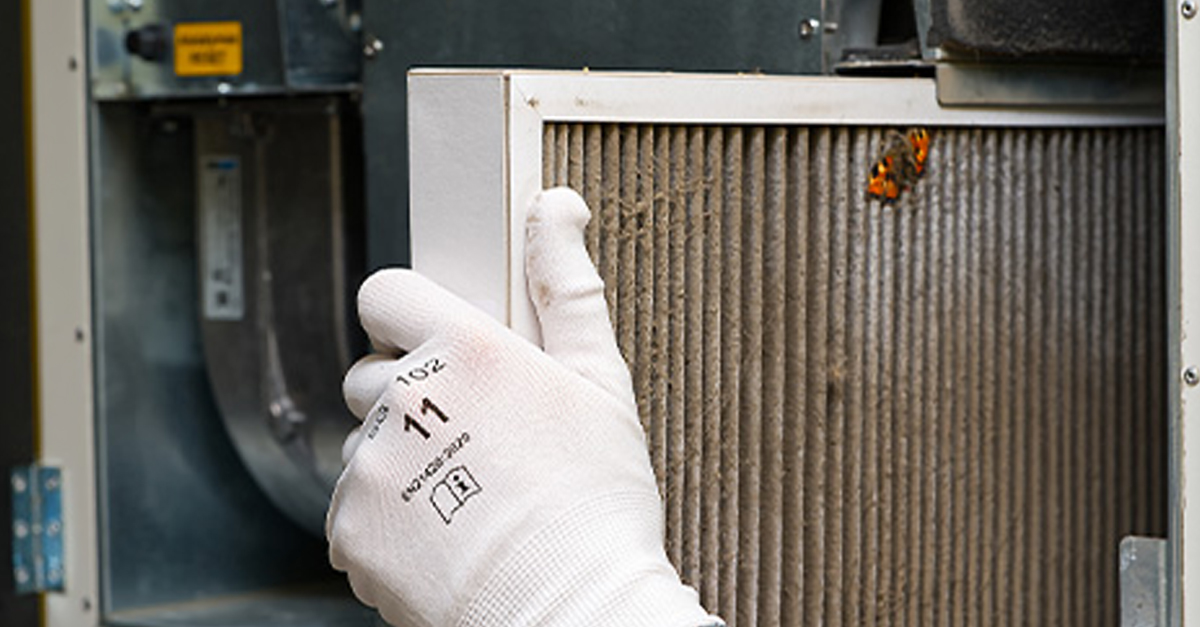
Filters are a good starting point, Hoffman said, but they come with real limitations. The first is simply the challenge of getting contaminants to them. Research from the American Society of Heating, Refrigerating and Air-Conditioning Engineers (ASHRAE) has found that only about 26% of the air in any given environment reaches the filter. The rest circulates without ever getting cleaned.
“You think about the filter on your air conditioner,” he said. “You turn your air conditioning system off. It’s not filtering the air.”
Even when air reaches a filter, the filter only captures particles larger than a certain size. HEPA filters, which are marketed as trapping 99.9% of contaminants, capture 99.9% of particles above 0.3 microns of the air that reaches them. Smaller particles pass through until enough buildup narrows the gaps. And there is the Brownian Motion, which also helps the filter to trap smaller particles. As the Brownian Motion filter gets increasingly efficient, concern grows for a clogged filter that could burn up the motor. It’s best to replace the Brownian Motion filter long before it gets highly efficient, but this seems counter-intuitive.
The best solution, Hoffman said, is to combine filtration with proactive distribution, using ducted airflow to move all the air actively and constantly through the environment rather than waiting for contaminants to drift toward a single return.
Ionization: clumping the invisible
The second technology, ionization, works by electrically charging the particles in the air so they aggregate, clumping together until they’re either heavy enough to drop out of the breathing zone or large enough for a filter to capture them.
The most effective form for immediate ionization, Hoffman said, is needlepoint ionization, a highly charged element that sends a negative charge across passing air, reversing the polarity of positively charged particles so they attract each other and aggregate.
“Instead of dealing with 0.3-micron or smaller submicron particles, those particles are getting bigger—2.0, 2.5,” he said. “As you continuously produce ionization, even at lower levels, the larger those particles get.”
Combined with filtration, he said, ionization creates a significant double effect: particles that would have slipped through a filter on their own are now large enough to get caught. Add ozone to that mix, a third technology, and you’ve got a system that doesn’t just capture airborne contaminants but actively destroys bacteria and mold before they reach the filter at all.
“Air quality issues are multifaceted, so you need a multi-strategic solution,” Hoffman said. “By adding three technologies, now you’ve got something multi-strategic.”
Ozone: powerful but scalable
Ozone has a complicated reputation, Hoffman said, explaining that the Environmental Protection Agency’s (EPA’s) current limit for ozone is 0.05 parts per million. The Occupational Safety and Health Administration’s (OSHA’s) threshold is 0.10. Humans typically start smelling ozone at around 0.02 parts per million, and, as Hoffman noted, the beach smell most people find pleasant and clean usually falls somewhere between 0.10 and 0.15.
“Some say ozone will kill you,” he said. “The reality is the length of time you’re exposed to it and your personal sensitivity to it are bigger problems than the actual level.”
Chemically, ozone (O3) is an unstable molecule. When it encounters other compounds like formaldehyde, it donates its extra oxygen atom, altering the target molecule’s structure. With enough exposure, it oxidizes the contaminant and breaks it down into basic components. With pathogens, the mechanism is different but equally effective: Ozone disrupts the RNA and DNA of bacteria and mold, stopping reproduction.
Hoffman described swab testing that demonstrates the effect: Swab a surface, send it to a lab, document what’s growing, then run ozone in the room for 12 to 24 hours, and swab the same area again. After treatment, nothing grows.
“It’s pretty amazing what ozone can do and how powerful it can be,” he said. “It’s just that too much of it, uncontrolled, is the problem.”
The solution is scalability. The small corona discharge ozone generator he demonstrated, rated for up to about 900 square feet, has a dial that lets users adjust output. The goal is maintaining a level that’s actively working on surfaces and air without reaching concentrations that become problematic for occupants.
UV and the catalytic leap
Ultraviolet (UV) light at wavelengths between 184 and 256 nanometers is germicidal—it destroys bacteria, viruses, and mold. But UV on its own, Hoffman said, has a significant limitation: Its effective kill range extends only a couple of inches from the lamp, and microbes must be exposed to it long enough for it to do damage.
“At 2,000 CFMs in an HVAC system, the bugs hardly get a sunburn,” he said. “It just can’t be there long enough to be destroyed.”
In practice, he said, UV lights installed in HVAC systems work well on the surfaces immediately surrounding the lamp, particularly on the A-coil, but leave everything else largely untouched. He described inspecting systems and seeing clean strips where lamps were positioned with contamination in between.
The breakthrough came from combining UV with a target plate. The technology traces back to Beijing, where researchers discovered that titanium dioxide painted on the sides of buildings was reacting with sunlight to keep the surrounding sidewalks clean.
That observation led to what is now called PCO technology: a UV lamp positioned close to a plate coated with titanium dioxide, creating a catalytic reaction that produces oxidizers—not ozone. These reactive compounds travel downstream into the environment and proactively address bacteria and mold.
Modern versions of the technology use a honeycomb plate rather than a flat plate, maximizing surface area to produce more oxidizers, with multiple metallic coatings, reflector plates, and other refinements. Hoffman noted that his company’s current PCO units use a quad-metallic coating, LED instead of traditional UV lamps to avoid the roughly 10,000-hour lifespan limitation of UV bulbs, and what he called dielectric barrier ionization rather than needlepoint.
Multi-cluster ionization
That last technology—dielectric barrier ionization—came from a trip Hoffman made to South Korea years ago to deliver indoor air quality training. While he was there, the company that had brought him over revealed the real purpose of the visit: They had developed a new ionization technology and wanted to find a U.S. partner.
Unlike needlepoint ionization, which produces single negative ions that discharge and stop working once they’ve interacted with something, the dielectric barrier ionizer produces a clustered positive-and-negative ion pair. Those clusters, Hoffman said, continue working after each interaction—spinning out, hitting the next surface, then the next—remaining active in the environment for a much longer time.
“Instead of that ion going out and hitting something and being done, this clustered ion goes out, hits something, and then keeps going,” he said.
His company received the rights to the technology for the U.S. and Canada and trademarked it as multi-cluster ionization. Combining it with the PCO probe—UV or LED light, honeycomb target plate, and dielectric barrier ionizer—produced a unit that incorporates four of the five air purification technologies in a single device.
Chemical-free fogging
The five technologies detailed above formed Hoffman’s foundation for explaining what he called chemical-free fogging.
The process uses PCO and ionization technologies without any chemical agents. Instead of introducing a disinfectant into the environment, the equipment sends oxidizers throughout the space, addressing surfaces and air simultaneously.
In practice, Hoffman said chemical-free fogging is built into both sanitization and remediation protocols. During a remediation project, it runs inside containment throughout the cleaning process. After containment comes down, the entire structure gets treated.
This approach has been particularly successful with chemically sensitive individuals who can’t tolerate conventional disinfectants, he said. Because the process uses no chemicals, those clients can return to the treated facility without experiencing the reactions that typically follow treatment.