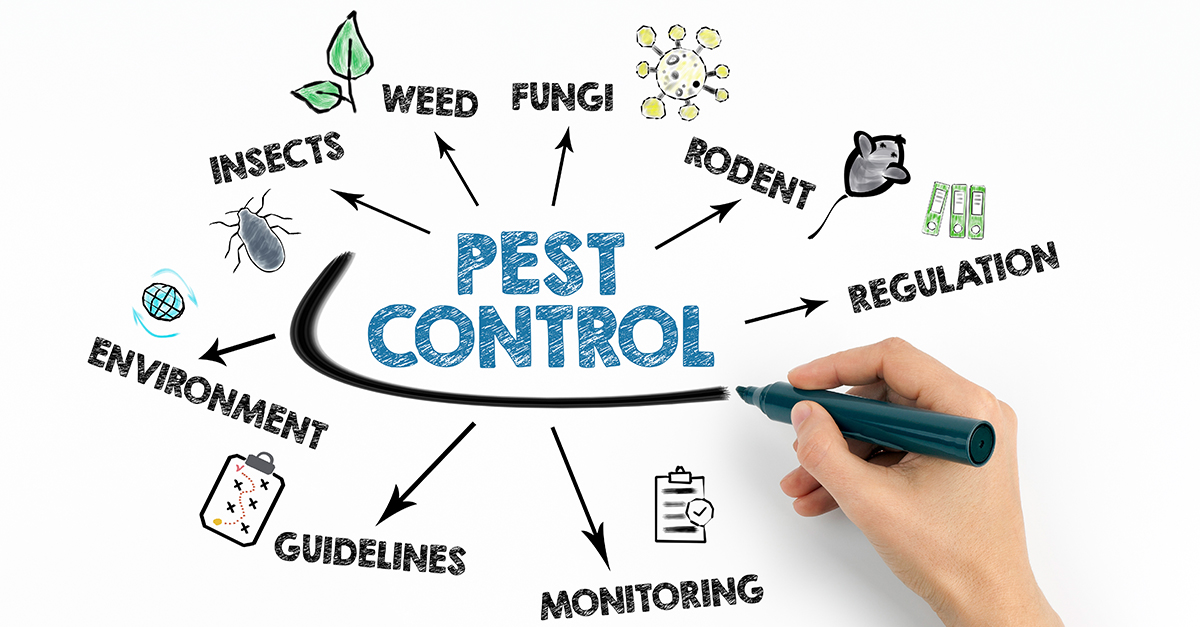
When it comes to maintaining healthy, safe, and compliant facilities, pest control is a critical yet often under-scrutinized puzzle.
Choosing the right pest management provider shouldn’t just be about who offers the lowest price. It’s about selecting a long-term partner who understands the complexities of your facility, works collaboratively with your maintenance and cleaning teams, and offers services that go beyond basic pest control.
As you prepare to issue a request for proposal (RFP) or reevaluate your current provider, ask yourself eight key questions to guide the process.
1. Do they go beyond the basics?
A quality pest management company should provide comprehensive solutions that address the full range of pest threats, not just treat an existing infestation. Look for a provider that offers:
- Structural exclusion to seal entry points and prevent future invasions.
- Ongoing monitoring and inspections to detect pest activity early.
- Targeted treatments for a variety of pests, including rodents, birds, cockroaches, flies, stored-product pests such as moths or beetles, and stinging insects.
- Sanitation recommendations to address conditions that attract pests.
A service approach that combines prevention, monitoring, and control will help keep your facility pest-free all four seasons.
2. Are they environmentally friendly?
If your facility is Leadership in Energy and Environmental Design (LEED) certified or working toward certification, your pest control provider must be familiar with green service protocols. Ask the following questions to determine their compatibility with your organization’s environmental goals:
- Do they follow integrated pest management (IPM) principles? According to the Environmental Protection Agency (EPA), IPM programs use current, comprehensive information on the life cycles of pests and their interaction with the environment to manage pest damage by the most economical means, and with the least possible hazard to people, property, and the environment.
- Can they document low-toxicity and nonchemical options?
- Are their service strategies compatible with post-construction LEED operations?
- Does their company have an environmental stewardship policy when it comes to designing pest control programs?
An actual IPM program focuses on inspection, monitoring, prevention, and the targeted application of pesticides only when necessary.
3. Are their programs adaptable?
Each facility type comes with unique operational challenges and service expectations. The pest control company you select should have a proven track record of adapting programs to meet each facility type’s specific needs.
Healthcare
- Can they respond quickly to service requests?
- How do they ensure minimal disruption in occupied rooms or high-risk areas?
- Can they assist in developing standard operating procedures (SOPs) for recurring services?
Education
- Are their technicians trained in IPM regulations specific to schools in your state?
- Can they supply service logs for required state postings? Is there a digital platform to access this documentation?
Government and military
- Are their technicians able to pass background checks and follow strict security protocols?
- Will they sign non-disclosure agreements (NDAs)?
- How do they handle access-restricted or high-security zones discreetly?
These considerations determine how well your pest control provider understands the regulations, risk levels, and your facility type’s expectations.
4. What’s included in the agreement?
Your service agreement should clearly define:
- Which pests are covered, and which are not (i.e., termites, birds, wildlife, etc.).
- What areas are included, such as exterior perimeters or rooflines.
- Service limitations, such as height restrictions for treating stinging insect nests.
Avoid surprises by asking:
- Do they outsource any specialty pest work?
- What are the rates for noncovered services?
- Are seasonal pests (i.e., ants or wasps) included?
Also, request a certificate of insurance and clarify contract terms:
- Do they offer a fixed-term contract or a flexible service agreement?
- Are price increases scheduled?
- What is the cancellation policy?
Some contracts lock you in with little recourse. Look for flexibility whenever possible.
5. Can they handle sensitive environments?
Experience matters, especially when the stakes are high. For example, a busy children’s hospital operating at full capacity cannot afford disruptions from pest issues The right pest management partner will:
- Adapt quickly to changing access requirements.
- Communicate clearly with your team about scheduling and expectations.
- Maintain readiness and detailed SOPs for rapid deployment.
Whether it’s a patient room that can only be serviced between medical treatments or a government facility with rigid access zones, you need a team that’s proactive and professional.
6. How do they define success?
Not all pest control companies measure success indentically. Some focus on marketing and visibility, but most trusted providers define success by outcomes. Ask a prospective provider:
- How do they report performance?
- Can they provide references or case studies?
- How do they handle ethical considerations, such as rodent control in animal-sensitive environments like zoos?
The answers to these questions can reveal whether the company’s values and methods align with your facility’s goals.
7. Are they willing to educate?
Procurement-driven organizations require a pest control provider that is a source of insight, not just a line item. Look for a provider that will:
- Meet with procurement teams.
- Explain the value behind the data, not just the price.
- Share how their work supports broader facility health goals.
- Educate cleaning and maintenance teams on pest prevention best practices.
An ideal pest control partner isn’t just selling a service; they’re contributing to your facility’s long-term success.
8. Are they transparent?
A quality pest management partner makes it easy for you to access and understand your service data. Choose a provider that will:
- Provide a secure online platform or portal for real-time reporting and access to documents.
- Include photos, trend charts, and corrective actions in service reports.
- Deliver audit-ready documentation for compliance and inspections.
- Review trends with you regularly and recommend preventive steps.
The right provider turns reporting into actionable insights that help keep your facility pest-free year-round.
Do your homework
Be a proactive buyer. Don’t rely on online reviews. Ask potential pest control partners for references from similar facilities. Learn how the company operates and examine its workers’ philosophies to determine whether they will be a good fit.
By asking the right questions and looking beyond cost, you’ll find a pest management partner who can truly support your facility’s cleanliness, safety, and operational goals