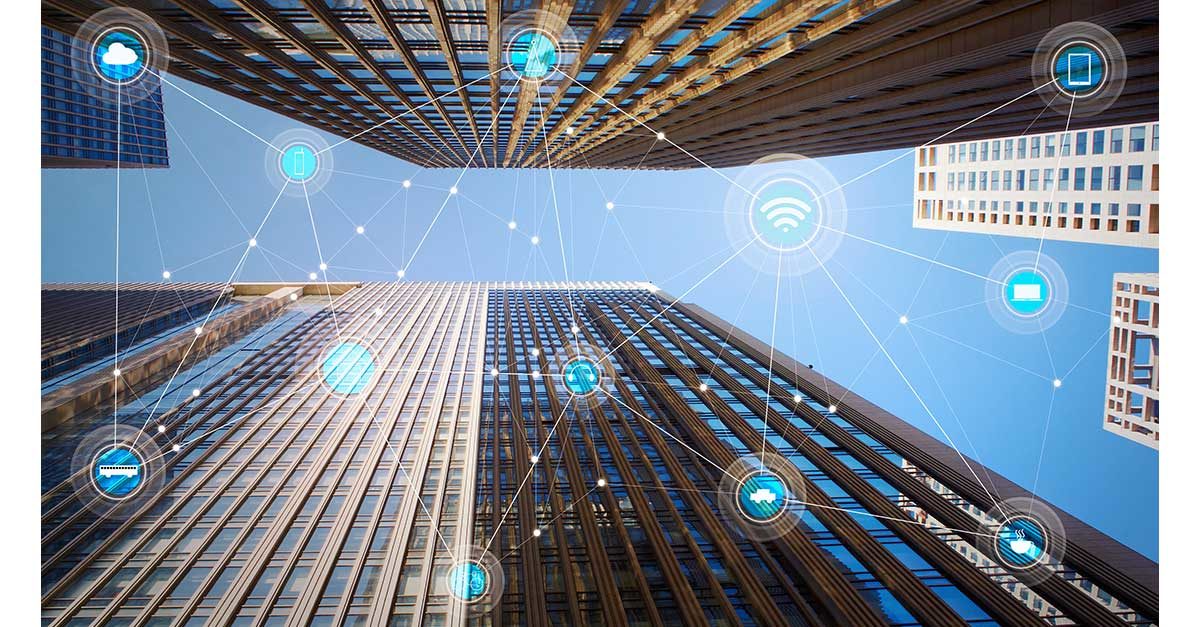
The concept of connectivity in the cleaning industry continues to gain momentum. During the past few years, we’ve seen increasing coverage on the Internet of Things, fleet management systems, workloading and productivity apps, dispenser technology, and a whole lot more. However, as trending as the topic of connectivity may be, the concept of utilizing interconnected technology to monitor facilities may not be as revolutionary as we have come to think.
“Many commercial buildings have had networks of sensors to control heating, ventilation, and air conditioning (HVAC) for decades, before the internet proliferated,” says a white paper by James Tu, founder and CEO of intelligent lighting and energy company Social Energy Partners, and built environment expert Joseph Aamidor. “These building automation systems collect temperature data by zone or room and report back to a central system, which can modify space temperatures.”
Although building automation technologies have been around for quite some time, the whitepaper says, usage continues to increase while the technology offerings improve—which means we may just be scraping the tip of the iceberg when it comes to the impact our buildings will have on facility operations.
With that in mind, it’s important for us to start looking now at the impact technology developments will have on our building service providers in the long run. The sensitive nature of these technologies will impact all aspects of custodians’ jobs—from how they go about cleaning a surface to what chemicals, wipes, or cloths they use to clean it.
Developments disrupting the way we organize our cleaning and maintenance operations will also go beyond sensor technology and computers. As smart buildings continue to emerge, disruption to our industry will literally embed itself in the walls, floors, and ceilings due to the materials selected for the architectural design.
This month’s cover story, “Innovation in Building Infrastructure,” discusses how we can prepare for what lies ahead in the facility services industry, and how changes in architecture and design will impact training, processes, and workflow. Like the technology we have seen, this article is just the tip of the iceberg of what we plan to cover on this topic in the months ahead.