K-12 schools face unprecedented operational pressures. Facility leaders must maintain safe, clean environments while navigating labor shortages and aging infrastructure. At the same time, school districts face growing expectations to support academic outcomes, student wellness, and community trust.
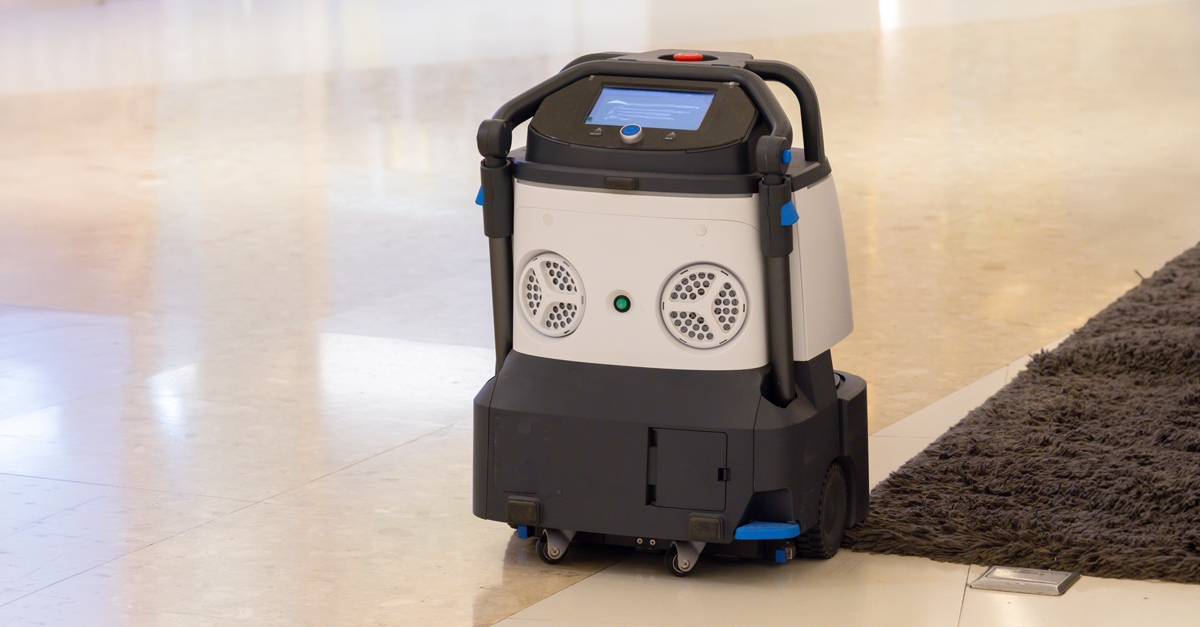
School district leaders are incorporating robotics into their cleaning routines to address these operational pressures. Robotic cleaning protocols that began as isolated pilot programs have transitioned into a practical, repeatable operational strategy. For school leaders, the conversation is no longer if robotics belongs in schools, but how to deploy them responsibly, affordably, and with a measurable return.
Robotics does not replace school staff, but rather it directly supports the learning environment. Cleaner, safer facilities reduce distractions, support attendance, and reinforce confidence among parents, teachers, and administrators.
Autonomous floor cleaning can help schools achieve these goals by improving consistency throughout the facilities. For example, many K-12 gyms are open to the public 18 hours a day, leaving very little time for staff to complete a deep cleaning. However, staff can program autonomous systems to clean in that limited-time frame, ensuring the gym meets the rest of the building’s cleanliness standards.
Equally valuable as consistency, robotics eliminate repetitive floor work, allowing staff to focus on higher-value, above-the-floor tasks like detailed cleaning of door knobs and desks and rapid response when a student gets sick. This daytime visibility reassures stakeholders that the school is clean. In K-12 schools, that visibility matters. Clean schools signal care, stability, and discipline, which are foundations for academic success.
Solving the labor crunch
The labor challenge in K-12 schools is structural, not cyclical. Absenteeism, turnover, and competition for front-line workers are long-term realities. The use of robotics stabilizes operations by automating routine floor care, which often accounts for 30% to 40% of custodial labor.
Rather than eliminating custodial roles, robots enhance the productivity of experienced staff and support new workflow models in which a single trained operator can oversee multiple tasks. This approach improves retention, reduces burnout, and creates pathways for custodians to move into training or management roles, strengthening the workforce rather than shrinking it.
The return on investment (ROI) for robotics is evaluated differently in schools than in commercial or healthcare environments. School districts increasingly focus on:
- Labor costs due to staff vacancies and overtime.
- Predictable operating expenses versus volatile wage growth.
- Consistency across multiple campuses.
- Reduced retirement, benefit, and payroll obligations over time.
The most successful districts treat robotics as long-term operational infrastructure, not short-term labor substitution.
Overcoming sticker shock
The upfront price is often the first concern school district leaders have about robotics, yet this hesitancy is easy to overcome with the right framing. K-12 districts have begun leasing robotic equipment, classifying the costs as operating expenses rather than capital purchases.
Leasing aligns with how schools already fund equipment, allowing districts to preserve capital while achieving immediate operational benefits. In this presentation, robotic floor equipment becomes a budget-neutral tool for managing risk, stabilizing staffing, and improving service delivery.
K-12 districts typically place robotics in one of two buckets:
- Operating expense (leased model): In this model, robotics are purchased through monthly or annual lease payments bundled with service, training, and support, simplifying approval and smoothing cash flow.
- Capital equipment (owned model): In this model, robotics depreciate over three to five years, like other floor equipment.
Both approaches work. The key is matching the funding model to district governance and financial strategy. Since districts budget almost entirely in operating expenses, anchor the conversation on fully burdened labor cost, not robot price.
A fully burdened labor rate is the total hourly cost to employ a worker, encompassing their base wage plus all indirect costs such as benefits, taxes, insurance, and overhead (e.g., equipment, facilities). It provides the true cost of labor, which is crucial for accurate bidding, project profitability, and determining whether hiring is more cost-effective than outsourcing.
The average U.S. K-12 custodian costs a school district US$55,000 to $70,000 per year, fully burdened. A cleaning robot costs $12,000 to $18,000 per year in operating expenses. By automating 50% to 75% of floor work, districts reduce overtime, staff vacancies, and the need for substitute labor, creating labor efficiency gains without eliminating positions. This is why the ROI works inside an operating budget—not despite it—politically, financially, and operationally.
Creating a natural fit for robotics and STEM
Another benefit of autonomous robots for school district leaders is that they demonstrate the value of technology to students. Most K-12 districts offer robotics or science, technology, engineering, and mathematics (STEM) programs. Cleaning robots provide a real-world extension of that STEM investment.
Autonomous cleaning robots:
- Demonstrate applied robotics, artificial intelligence, and automation.
- Support student engagement with real operational technology.
- Reinforce STEM, workforce development, and career pathways.
- Help students see robotics beyond competition and into daily impact.
In many districts, custodial robotic equipment becomes a visible, practical example of technology at work by connecting facilities, academics, and workforce readiness.
Aligning with the ISSA CIMS Standard
Autonomous robots provide a leg up for schools concerned with meeting industry standards. Robotic cleaning directly supports the intent of the ISSA Cleaning Industry Management Standard (CIMS) by improving consistency, documentation, training, and quality assurance.
Robotic equipment strengthens:
- Process control and standardization.
- Measurable outcomes and continuous improvement.
- Safety, compliance, and risk mitigation.
- Transparent reporting to boards and communities.
This direct support allows school districts to prove performance to the community, not just describe it.
Looking at the bigger picture
For school district leaders and employees, this moment in technology adaptation matters. The use of robotics in K-12 schools is not about machines; it’s about enabling people, supporting students, and building resilient school systems.
Beyond deploying technology, robots are helping schools focus on learning, protect their workforce, and steward scarce public resources responsibly.