Los Angeles Delays $30 Minimum Wage for Hotel, Airport Workers
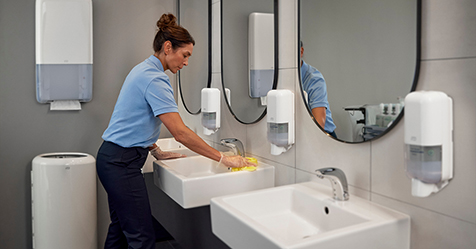
The City Council in Los Angeles approved a measure to delay a US$30 minimum wage for hotel and airport workers, including janitorial staff, until after the 2028 Olympics, the Los Angeles Times reported. The new plan calls for raising the wage to $25 in July and to continue hiking it toward $30 by January 2030.
Last week, the City Council approved the 18-month delay to fend off a business leader-backed initiative to eliminate the gross receipts tax, which is the city’s second-largest revenue stream. With the minimum wage increase delay, the business leaders dropped their ballot measure which would have tanked the city’s budget.
In addition to postponing the $30 minimum wage, the council delayed the hourly healthcare payment to start at $8.15 an hour for airport workers in July 2027 and $4.25 for hotel workers July 1 of this year.
Because the 11 to 4 vote was not unanimous, the new pay schedule will head to a second vote this week.
In May 2025, the council approved a proposal that would have increased the minimum wage to $30 in July 2028 and also raised an hourly payment for healthcare coverage.
NOAA Predicts Below-Normal 2026 Atlantic Hurricane Season
Last week, forecasters with the National Oceanic and Atmospheric Administration’s (NOAA) National Weather Service predicted another below-normal hurricane season for the Atlantic basin this year. As CMM previously reported, in April hurricane researchers at Colorado State University predicted a slightly quieter hurricane season as well.
NOAA’s outlook for the 2026 Atlantic hurricane season, which runs June 1 to Nov. 30, predicts a 35% chance of a near-normal season, a 10% chance of an above-normal season, and a 55% chance of a below-normal season.
The agency is forecasting eight to14 named storms (winds of 39 mph or higher). Of those, three to six are forecast to become hurricanes (winds of 74 mph or higher), including one to three major hurricanes (category 3, 4 or 5 with winds of 111 mph or higher). NOAA has 70% confidence in these ranges. An average season has 14 named storms with seven hurricanes, including three major hurricanes.
The Atlantic season is expected to be below normal due to competing factors. El Niño is expected to develop and intensify during the hurricane season, while ocean temperatures in the Atlantic are expected to be slightly warmer than normal and trade winds are likely weaker than average. El Niño conditions tend to support less tropical storms and hurricanes, while warmer ocean temperatures and low winds support a more active year.
“Although El Niño’s impact in the Atlantic Basin can often suppress hurricane development, there is still uncertainty in how each season will unfold,” said NOAA’s National Weather Service Director Ken Graham. “That is why it’s essential to review your hurricane preparedness plan now. It only takes one storm to make for a very bad season.”
NOAA’s outlook is for overall seasonal activity based on large-scale weather and climate patterns. It does not indicate where or when any storms may affect land as that is determined by short-term and variable weather patterns. The outlook is not a landfall forecast.
“Preparing now for hurricane season — and not waiting for a storm to threaten — is essential for staying ahead of any storm,” Graham said.
Visit weather.gov/safety and Ready.gov for important preparedness information.