ISSA Show Spotlights Complexity of Healthcare Facility Cleaning
November 18, 2025
At ISSA Show North America last week, Linda Lybert, the founder and executive director of the Healthcare Surfaces Institute, detailed how healthcare facilities have a risk all their own—healthcare-acquired infections (HAIs).
In high-income countries, seven out of 100 hospitalized patients contract an HAI, according to Lybert. That number increases to 15 out of 100 patients in low- and middle-income countries. In the United States alone, one out of every 17 patients contracts an HAI, and 99,000 people die annually of an HAI.
 Part of the problem is that hospitals are not built for cleaning and disinfection.
“Infection prevention begins at design,” Lybert said. She recalled visiting a newly built hospital wing for high-income patients and noticing the nursing station counter was granite.
“I told them it would probably have to be ripped out as granite can’t be effectively disinfected, and sure enough they had to remove it,” she said.
Stainless steel is another surface that is challenging to clean and disinfect.
“Brushed stainless steel is the perfect surface in terms of microbe attachment,” Lybert said. She added that bleach will damage the surface, creating even more areas for microbes to attach.
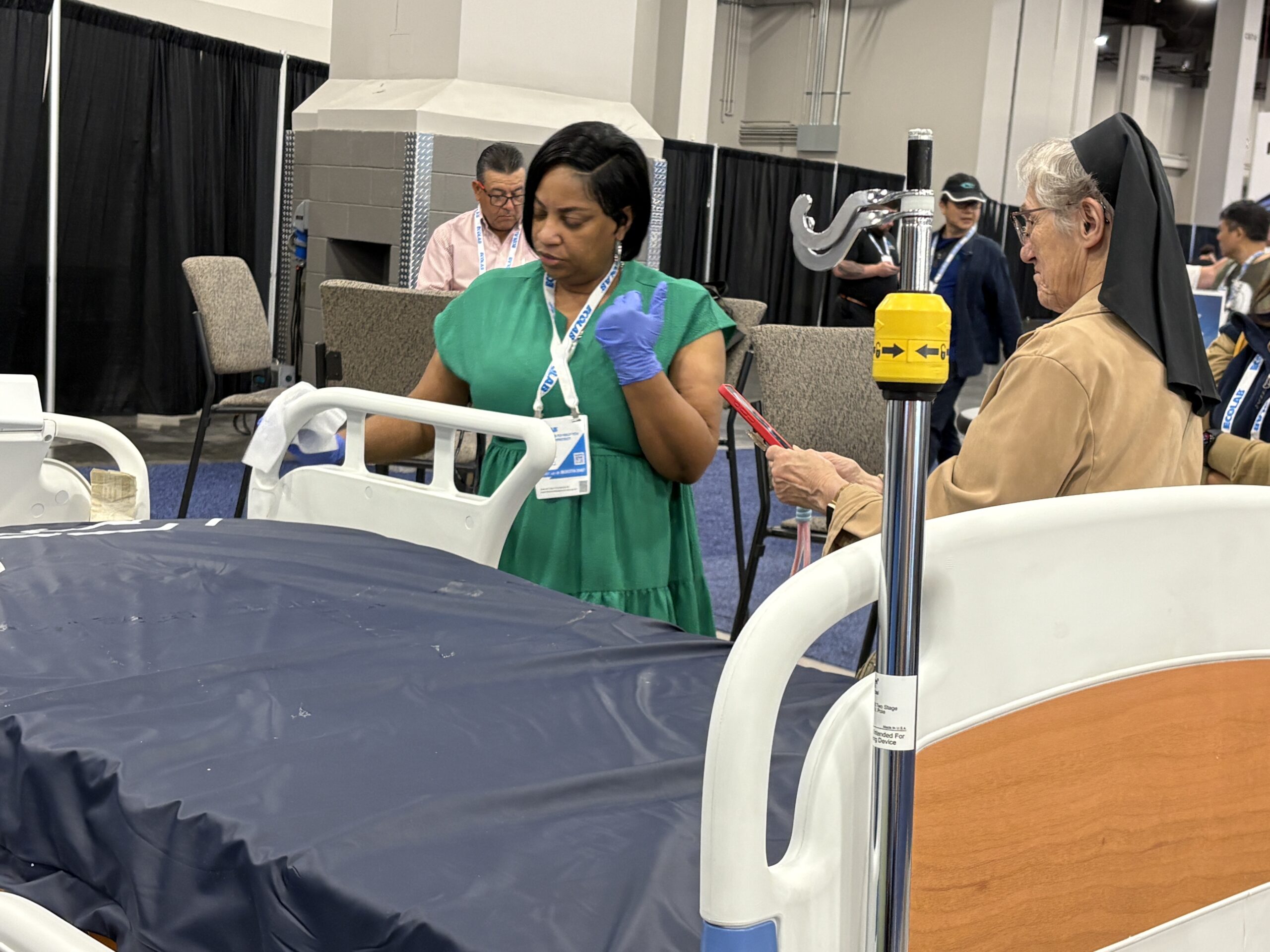
Various healthcare areas and surfaces, such as lobbies, emergency rooms, patient-care areas, and intensive care units require different cleaning protocols. At the ISSA Show, environmental services specialists demonstrated how to clean and disinfect the surfaces of a hospital bed at a healthcare booth staffed by Healthcare Surfaces Institute and Indoor Environmental Healthcare and Hospitality Association (IEHA) members. Check out the Healthcare Surfaces Institute website for tips on proper cleaning protocols for healthcare facilities.
Latest Articles
Sponsored Articles