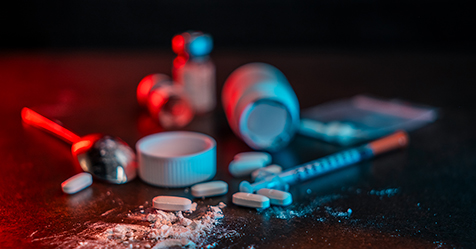
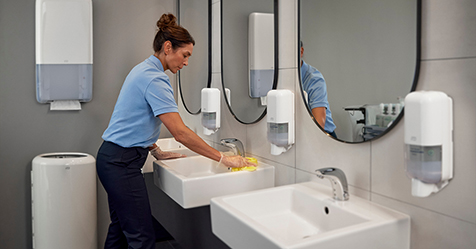
The percentage of Americans using illicit drugs has increased in recent years and a share of that activity takes place in hotels, restaurants, bars, and nightclubs. The Substance Abuse and Mental Health Services Administration’s annual drug use survey found that the portion of people who used illicit drugs increased from 22.2% in 2021 to 25.5% in 2024, the most recent year for which the government reported data. That’s more than 70 million Americans. The upshot of these results is that a hospitality facility’s guests and employees—especially cleaning staff and contract cleaners—might be subject to hazardous exposure incidents. Drug residue can rapidly contaminate hotel rooms, restaurant tables, restrooms, and public spaces. People who have overdosed also pose an exposure threat when cleaners, security personnel, or bystanders attempt to help an unconscious individual. Fortunately, hospitality sector businesses can take steps to bolster safety practices, protect guests and employees, and limit their liability amid the proliferation of fentanyl and other dangerous substances. Know the risks Illicit drug use in hospitality venues isn’t a new problem. But the growth in the types and potency of synthetic drugs is a recent development. The College of American Pathologists’ 2025 drug listing identified nearly 40 types of novel opioids, including fentanyl and similar drugs, as well as 20 varieties of benzodiazepines, which are also classified as synthetics. The danger is real. But many organizations are playing with luck regarding narcotic exposure. No one knows the potency of the smashed-up pills a hospitality venue worker might find discarded in a plastic bag. Workers or guests could touch the powdery drug residue and then transfer it to their face, where it can get in their nose or mouth. The powder can also be absorbed through an open cut on their hand. Drug hazards are not limited to direct contact. HVAC systems could spread powdered synthetic drugs into the air, where they become an inhalation hazard. These risks are continuous in the hospitality industry as venue owners often have limited control over who enters their establishments and what they are carrying. The nonstop flow of customers virtually guarantees at least a few will use illicit drugs. Turn to the experts Hospitality operators must familiarize in-house and contract cleaning employees with decontamination best practices, but they may not be knowledgeable in these practices themselves. In this instance, they can reach out to environmental health and safety consulting firms that specialize in narcotics decontamination. Hospitality venues can also contact their local fire departments and law enforcement agencies for assistance. This option could prove helpful for smaller hospitality venues, which might lack the resources to hire a consulting organization. Fire departments have specialists trained to handle hazardous materials. Some law enforcement officers also have hazmat training. Those first responders can visit an establishment and discuss the best practices for managing contaminated areas. Step up with training The core problem—whether it’s at a high-profile facility attracting large crowds or a neighborhood venue with a typical weekend group—is a lack of training among hospitality cleaning teams. The first step in training is situational awareness. Before cleaning any room or area, housekeeping staff must review it thoroughly for signs of narcotic contamination. Vials and needles are obvious signs of drug use. But cleaning teams may not know to look for powdery substances on a counter, bathroom surface, or nightstand. They may be careless in handling discarded plastic bags that might still contain traces of drugs, or contaminated washcloths that venue guests used to wipe up drug residue. Housekeeping managers must set up a rigorous process for dealing with narcotic contamination. A key part of this process is ensuring the facility stocks cleaning supplies that are effective in neutralizing hazardous substances. Many hospitality venues stock anti-overdose medications for emergencies. However, they often fail to consider the contamination threat that employees, guests, or first responders face when they find an unconscious individual. Medication can save a life, but it doesn’t remove the threat of drug residue. Hospitality operators can drastically reduce their legal liability when they offer adequate employee training in decontamination processes and maintain proper cleaning supplies or decontamination solutions. These protective measures can also help shield them from reputational harm, as narcotic issues signal to customers that the establishment is unsafe. Safety measures aren’t strictly for playing defense, however. A hospitality venue that highlights their cleaning and decontamination process will stand out from the competition. Avoid decontamination mistakes The goal of efficient decontamination is to evaluate and identify a drug threat quickly, then thoroughly clean and decontaminate the area to make it safe for the next guests. A lack of training and hazard awareness can lead to mistakes that not only harm guests, but also facility staff. Some common mistakes cleaning professionals make when dealing with narcotics contamination and overdoses include: Failing to wear personal protective equipment (PPE). Hospitality managers must make PPE available to staff members when they are cleaning a suspicious substance or helping a person who has overdosed. Hand protection, such as disposable nitrile gloves, are key, along with eye protection and a KN95 mask. Working too quickly. Cleaners should take the extra time needed to look for signs of contamination and thoroughly clean the area where they suspect drug use has occurred. Failing to use adequate cleaning solutions. Hospitality managers must ensure that narcotic-neutralizing solutions are available to cleaning crews. Reusing cleaning materials. Reusing cleaning materials from room to room is dangerous as it increases the risks of cross contamination. Disposable wipes and towels, safely discarded after each use, eliminate that problem. Neglecting quality control. Managers must continuously reassess their decontamination process. Does it work as planned? How can it be improved? Using alcohol-based hand sanitizers. Alcohol opens cuts and skin pores on a person’s hand. This increases the risk of absorption if any narcotic residue remains on the hands. Handwashing with soap and water is best. Using alcohol-based hand sanitizers. Alcohol opens cuts and skin pores on a person’s hand. This increases the risk of absorption if any narcotic residue remains
The cleaning and facility solutions industry never stops moving, constantly offering new ideas, products, and equipment. But once a year, its offerings all land in one place—with a big bang. ISSA Show North America 2026 returns to the Mandalay Bay Convention Center in Las Vegas from Nov. 16 to 19. The show is built for everyone involved with cleaning—building service contractors, in-house facility managers, distributors, residential cleaners, manufacturers, and more. Picture thousands of professionals from across the globe under one roof. Hundreds of exhibitors fill the expo floor with the latest technology, sustainable solutions, and cleaning innovations, all wrapped around a packed schedule of education and training, certification courses, strategic workshops, and hands-on learning. The numbers tell the story: A survey of past visitors reported that 82% discovered new products and trends, 76% used the show to stay current, and 60% left with new peer connections. If your job touches the cleaning industry in any way, this is your moment to plug in, level up, and come away inspired. Come for the education Keeping up with industry change is hard, but the ISSA Show is designed to make it manageable. The week-long education program offers more than 110 sessions, available to those with an All-Access Pass. Sessions kick off Sunday with full-day preconference workshops, then continue Monday through Thursday in convention center classrooms and theaters on the show floor. The show is known for cutting-edge programming on a myriad of topics, from artificial intelligence (AI)-fueled cleaning operations, robotics and automation, and sustainability/environmental, social, and governance (ESG) measures to indoor air quality, healthcare cleaning, business growth, leadership, and marketing. These are not passive lectures. You engage directly with instructors, dig into real-world examples, and leave with tools you can put to work immediately. You can upgrade your experience by registering for full-day or half-day workshops and certification courses. Check out the full 2026 workshop and session catalog on issashow.com. Be sure to sign up for the show and handpick the sessions you wish to attend. Robots take center stage New energy on the 2026 expo floor centers on R.A.C.E., the Robotics & Autonomous Cleaning Experience. It gives contractors and facility managers a structured place to evaluate autonomous mobile robots in person and talk directly with the people building them. The experience is built around three elements: two live demonstration zones where robots run real world facility scenarios; expert-led panels on implementation, workflows, safety, and return on investment; and an innovation showcase for networking with technology leaders. The timing is deliberate. Three forces are reshaping cleaning operations at once: persistent workforce shortages, higher and better documented cleanliness expectations, and cleaning technology that has matured well past the pilot stage. R.A.C.E. is where attendees can size up that shift firsthand. If you are considering automation for your cleaning operation, be sure to download the free AI & Robotics Guide at issashow.com before you arrive at the show. Innovation takes the spotlight The Innovation Experience puts the industry’s newest ideas on stage through the Innovative Leaders Award Program. Participating exhibitors unveil the products and technologies built to solve the problems professionals wrestle with every day, from automation and equipment to hygiene solutions, facility-care products, and sustainability. A “People’s Choice Award” lets attendees weigh in on their favorites and is a fast, practical way to see what is genuinely new before they walk the expo floor aisles. The next sales generation competes After a headline-grabbing debut last year, the Global Collegiate Sales Competition returns to the show. Equal part competition and recruiting pipeline, the event attracts the next generation of talent to the cleaning industry. Over two action-packed days, 10 elite teams— made up of around 40 of the country’s most promising collegiate sales students—compete in speed selling and role-play scenarios using real products supplied by sponsors. Finalists present at the Innovation Theater on the show floor, judged by industry leaders. Network with purpose One of the best parts of the show is the energy. You are surrounded by people who get it—industry peers, prospective customers, mentors, and future business partners. The week is stacked with chances to connect, including a Hygieia Networking Lunch on Monday and a Welcome Happy Hour later that day, along with two IEHA events: a Welcome Reception on Sunday and a Membership Meeting and Luncheon on Tuesday. Various spotlight and networking events are built into the expo hall experience. You’ll find real value in the conversations, whether they happen over coffee or during a demo. Seek innovation Come early for the expo floor opening on Tuesday, Nov. 17. Packed with interactive demos, new product reveals, and experts ready to answer your questions, the expo floor features hundreds of exhibitors—fan favorites and almost 150 new exhibitors who will bring fresh products and ideas to the 2026 show. Give yourself plenty of time here; with the right strategy you will create a shopping list of must-have cleaning solutions and a stack of new industry contacts. Lock in the best rate ISSA members enjoy discounted registration rates, and the show offers several pass types to match how you want to spend your week. Rates rise as time marches closer to the show, so the earlier you commit with your registration, the more money you save. Member rates reflect the earliest registration window. Prices increase on Sept. 26, again on Oct. 24, and once more for onsite registration beginning Nov. 15, so booking early pays off. Groups of 10 or more qualify for a 15% discount when all passes are purchased together. Registration changes and cancellations must be made in writing by Oct. 20. Prepare for your trip ISSA Show partners with onPeak, its only endorsed hotel provider, to secure discounted rooms that typically average 30% below other travel sites—with no upfront costs, flexible terms, and hotel rewards points still in play. Rooms near Mandalay Bay go quickly, so book early through issashow.com rather than any unaffiliated third party. A few logistics worth noting: Badges are not mailed, so plan to pick yours up
Step into the Tork booth and see what a smarter approach to restroom hygiene actually looks like. Tork Insight data shows 28% of visitors spend less time in spaces with poorly maintained restrooms, a number with real revenue behind it. Walk through how Tork puts that insight into action: High-capacity availability that keeps restrooms running, data-driven cleaning that flags problems before visitors notice them, and sustainable hygiene practices built for everyday use. You will leave with a clearer view of what a well-run restroom experience can do for a business, and how Tork can help. Visit us at ISSA Show Booth #3129 torkglobal.com/us/en
Great cleaning is easy to see. Sprayway is Consumer Reports’ top-rated glass cleaner for 2026, delivering the shine, clarity, and streak-free results that facilities, customers, and occupants notice immediately. Whether maintaining offices, schools, healthcare facilities, or transportation assets, Sprayway helps create a polished, professional impression while making routine cleaning faster and more effective. When appearance matters, Sprayway delivers results that stand out. Visit us at ISSA Show Booth #701 spraywayclean.com
With PortionPac® you can put the work first and make every step count. Designed for an Efficient Workday Issue the items planned for each assignment. When it’s time to refill, add water to the color-coded bottle, add the color-matched premeasured solution, and clean Fewer products handle more tasks, simplifying purchasing, storage, and inventory. Premeasured Pac® brand pouches make usage and costs more predictable. Easier on Your Crew Less bulk on the cart with fewer items to track A straightforward, repeatable routine employees can follow wherever the job takes them More time cleaning. Less to manage. Visit us at ISSA Show Booth #3535 portionpac.com
World Health Organization (WHO) member states concluded the eighth meeting of the Intergovernmental Working Group (IGWG) on the WHO Pandemic Agreement last week, advancing negotiations on a proposed pathogen access and benefit-sharing (PABS) system that would underpin a faster and more equitable response to future pandemics. The five-day meeting brought together governments and stakeholders in Geneva, where negotiations continued on the PABS annex, focusing on an equitable, feasible and implementable system. The PABS annex is a central component of the WHO Pandemic Agreement, adopted by the World Health Assembly in 2025. It aims to facilitate the rapid and timely sharing of materials and sequence information from pathogens with pandemic potential, and, on an equal footing, enable the rapid, timely, fair and equitable sharing of the vaccines, therapeutics and diagnostics developed from their use. The meeting took place as governments prepare for the Second United Nations General Assembly High-Level Meeting on Pandemic Prevention, Preparedness and Response on Sept. 25 in New York. The high-level meeting is expected to bring together heads of state and government to reinforce political commitment to fighting future pandemics. The political declaration that will be tabled for adoption at the meeting calls for, among other things, the timely completion of the PABS annex. “We made a promise after COVID-19 that we would not leave the world as vulnerable to the next pandemic as it was to the last,” said Dr. Tedros Adhanom Ghebreyesus, WHO director-general. “The progress made this week brings us closer to keeping that promise. As leaders prepare to meet at the United Nations General Assembly, the message from Geneva is clear: protecting future generations requires commitment, cooperation and urgency. Finalizing the PABS annex is essential for strengthening the world's collective defenses against future pandemic threats.” Finalizing the annex will pave the way for countries to sign and consider ratification of the Pandemic Agreement, strengthening global coordination and capacity to prevent, prepare for and respond to future pandemics.
This week, the U.S. Green Building Council (USGBC) released two comprehensive resources during New York Climate Week designed to accelerate decarbonization of the world’s existing building stock. The Decarbonization Blueprint: Reducing Emissions and Creating Value in Existing Buildings report and USGBC’s Corporate Practice Toolkit for High-Performance Buildings provide organizations with the frameworks, data and practical tools needed to transform real estate portfolios into high-performance, low-carbon assets. The two resources come as the United Nations Environmental Program’s (UNEP) Limiting Overshoot report calls for urgent action to mitigate the effects of exceeding 1.5°C, a likely near-term outcome. “The existing building stock represents one of the most immediate levers we have for carbon reduction — and the challenge isn’t awareness, it’s activation,” said Sarah Zaleski, chief products officer, USGBC and Green Business Certification Inc. (GBCI). “Building tenants, owners and operators are asking for higher performing buildings; what they need is a credible, structured pathway that connects ambition to action.” Leadership in Energy and Environmental Design (LEED) is the world’s most widely used green building rating system, and The Decarbonization Blueprint report draws on data from nearly 11,000 LEED for Building Operations and Maintenance (LEED O+M) certified projects across 90 countries, representing 3.8 billion square feet. The projects have achieved an estimated 10.3 million metric tons of annual greenhouse gas emission savings and 81.8 million metric tons of cumulative reductions across a comprehensive view of emissions sources. For example, the report highlights how projects are using low-global warming potential (GWP) refrigerants to reduce impacts. They also are working to minimize refrigerant leakage, a critical, yet less frequently discussed component of decarbonization. The report further documents how performance-based frameworks deliver measurable emissions reductions, operational value and long-term decarbonization outcomes at scale. Featuring data and illustrative examples, the report demonstrates that emissions reduction can be achieved and verified in diverse markets and building types. USGBC's new Corporate Practice Toolkit for High-Performance Buildings provides practical guidance and model language to help organizations implement policies, procurement decisions and building-scale actions aligned with their real estate portfolio goals. The toolkit consists of the Corporate Policy Guide for High-Performance Buildings and the Corporate Procurement Guide for High-Performance Buildings. Corporate sustainability leads, building professionals and other stakeholders can use the free, interactive toolkit to set policies, identify strategies and utilize sample language to scale portfolio-wide action toward corporate goals such as decarbonization and resilience. The toolkit covers topics such as green building certification, risk and resilience, decarbonization, energy and water, and indoor air quality, among others. The guides feature peer examples to help provide context and make the case to corporate leaders. “Organizations are facing mounting pressure from investors, tenants and regulators to demonstrate measurable progress on sustainability, yet many lack the in-house expertise to translate goals into practical company-wide actions,” said Elizabeth Beardsley, USGBC senior policy counsel. “By making it easier for organizations to establish and execute green building policies, we’re accelerating a market-wide transformation toward high-performance buildings.” Download your copy of The Decarbonization Blueprint: Reducing Emissions and Creating Value in Existing Buildings here. Download your copies of the Corporate Policy Guide for High-Performance Buildings and the Corporate Procurement Guide for High-Performance Buildings here.
Today, the Global Commission on Healthy Indoor Air launched the Global Framework for Action: Advancing Healthy Indoor Air through Societal Engagement and Market Transformation, a landmark global roadmap designed to elevate and embed healthy indoor air as a public health imperative and a market priority, ultimately institutionalizing it as an everyday expectation in buildings everywhere. John Barrett, Chairman Emeritus at ISSA, the Association for Cleaning and Facility Solutions, served as a commissioner on the landmark effort, contributing expertise to help shape the strategic levers and actionable recommendations designed to drive global market transformation and public health impact. Unveiled during Climate Week in New York, just one year after the commission’s launch at the United Nations, the framework provides a comprehensive and coordinated strategy for tackling one of the world's most consequential yet underrecognized public health challenges. It calls on governments, multilateral organizations, public health institutions, businesses, building practitioners, researchers, financial institutions, professional organizations and communities to move beyond isolated interventions and align the policies, investments, innovations and everyday decisions that shape the air people breathe indoors. The framework draws on the latest scientific evidence and a year-long collaborative process involving more than 200 commissioners from over 40 countries, bringing together expertise and experience from dozens of disciplines and sectors. They developed 40 strategic focus areas and nearly 180 recommendations spanning the major levers of market transformation that can move healthy indoor air from growing awareness to widespread and sustained adoption. The framework labors toward a shared global vision: a future in which healthy indoor air is expected, measured, valued, financed, governed and continuously improved across all the places people live, learn, work and heal. Put simply, healthy indoor air should be the norm, not the exception. "Last year, we came together at the United Nations to launch the Global Commission and affirm through the Global Pledge for Healthy Indoor Air that healthy indoor air is a fundamental human right,” said Rachel Hodgdon, president and CEO of the International WELL Building Institute. “Today, we are putting that commitment into action. Over the past year, more than 200 leaders from more than 40 countries, including many of the world’s leading scientists, technical experts and advocates in healthy indoor air, have come together to build a first-of-its-kind global roadmap that aligns science, education, policy, innovation, investment and public demand. We did not need another report diagnosing the problem or explaining why it matters. We needed an actionable plan for changing the systems, markets and expectations that shape the air inside our buildings. That is what this framework delivers: a practical path for leaders all around the world to align their efforts and uphold the right to healthy indoor air for everyone, everywhere.” The launch comes at a moment of profound urgency and possibility. Household air pollution alone contributes to more than 3 million premature deaths each year, but mortality is only the starkest measure of a far wider toll. Poor indoor air increases the risk of respiratory and cardiovascular disease, worsens asthma and allergies, contributes to the spread of airborne infection, and undermines learning, cognitive performance, productivity and quality of life. The Framework, a shared strategic roadmap, shows how nine mutually reinforcing levers can shift markets, institutions, professional practice and public expectations. They include: Awareness and public engagement building Innovation, research and development Advocacy and policy development Education and training Market incentives and methods to drive demand Mobilization of financing and resources Codes, standards and leadership certifications Partnerships and collaboration Implementation, monitoring and evaluation The levers are designed to reinforce one another. Research and evidence can inform standards and building practice. Innovation can affect technical feasibility, reach and cost. Policy can create demand and accountability. Financing can accelerate deployment. Education can build the workforce needed to deliver widespread improvements. Public awareness and trusted performance information can reinforce every other lever.