One in 43 long-term care (LTC) residents acquires a healthcare-associated infection, according to the Centers for Disease Control and Prevention. This risk makes cleaning LTC facilities a distinct challenge.
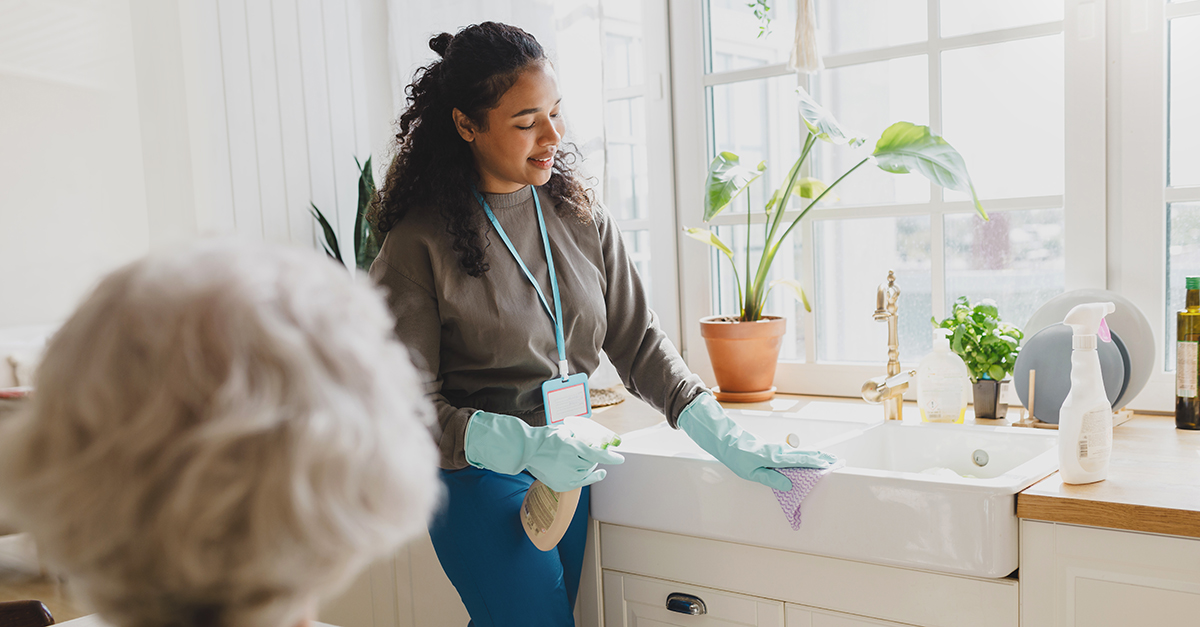
“It’s a combination of healthcare, hospitality, and interactive residential cleaning,” explained Gosia Baran, president and owner of Elmhurst, Illinois-based Helping Hands Cleaning Services. “Since LTC residents are elderly, we must focus on their health. Quality must be raised because residents with compromised immune systems are vulnerable to diseases that may spread there.”
Susceptible residents
LTC facilities, unlike schools or offices, are never empty. “We must be very careful when we clean, how we clean, and who is around,” said Dominika Wandachowicz, Helping Hands Cleaning Services’ business development manager. For example, a vacuum cord could pose a hazard for residents in wheelchairs or who are unsteady on their feet. Team members may need to wear face masks in rooms housing residents with low immunity or use specific cleaning solutions around those who cannot tolerate fragrances.
Jef Gordon, 4M Building Solutions regional vice president–operations, serves the Northeast, which is 4M’s highest-concentration area for long-term healthcare clients. He agrees that older adults with weakened immune systems are far more susceptible to infection, which means cleaning for health—not just appearance—must be the standard.
“All-purpose products and general protocols don’t cut it in long-term care settings,” Gordon explained. “The chemicals, disinfectants, and procedures all need to be matched to a healthcare-level threat environment.”
Additionally, teams must be trained to recognize at-risk residents, such as individuals with memory loss or Alzheimer’s, for example, and to handle unexpected situations, such as incontinence, with both skill and sensitivity. “Cleaning staff in these facilities are often in more daily contact with residents than doctors or nurses,” Gordon said. “That level of access carries real responsibility.”
Facility complications
Stratus Clean also recognizes that LTC facilities face unique challenges in maintenance and cleanliness. For example, the Occupational Safety and Health Administration (OSHA) requires LTC facilities to have an up-to-date written Infection Prevention & Control Program (IPCP) and a bloodborne pathogens (BBP) exposure control plan. LTC facilities also face budget challenges in maintaining the cleanliness required to ensure compliance with the IPCP and BBP plan.
“While creating the plan is easy, execution and regular monitoring of the plan is more difficult,” explained Doug Flaig, Stratus Clean CEO. “This is especially true if the staff is doing the cleaning and there is a high rate of employee turnover.”
Gordon finds that government reimbursement structures in many facilities create constant budget pressure. Furthermore, as operating expenses rise, reimbursements rarely keep pace. “These facilities are also among the most heavily regulated environments we work in, with requirements at both the state and federal levels that don’t exist in commercial settings,” he explained.
Specific LTC facility requirements can include:
- Extensive background checks, including tuberculosis testing and vaccination requirements.
- State-mandated annual training. Rhode Island and Massachusetts, for example, require specific programs covering dementia care and resident-abuse prevention.
- Annual state survey audits conducted by the local department of health. These unannounced inspections are carried out by healthcare professionals, including registered nurses and social workers. “The result can affect a facility’s ability to take on new residents, so it places pressure on every department, housekeeping included,” Gordon said.
Residential living also creates challenges, including an inability to move residents’ furniture for deeper cleaning, cluttered or decorated environments, and resident interference with cleaning staff.
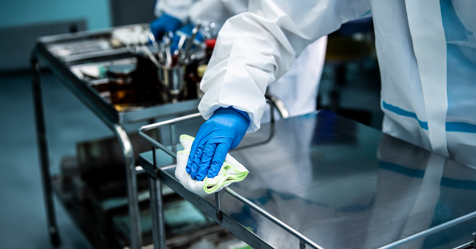
As LTC residents can wander throughout the facility, an ill patient can quickly spread illness. Residents can also resist hygiene practices, putting their peers at risk. These conditions necessitate frequent maintenance and disinfection of shared spaces to prevent the spread of pathogens. The most problematic areas are high-touch surfaces, such as doors, light switches, railings, elevator buttons, common area surfaces, therapy devices, chairs and other furniture, and TV remotes.
Memory care areas require an even higher level of support and sanitation due to residents not remembering events, for example, if they vomited during the day in their room or had a bodily fluid accident in the shower.
An overlooked area for infection is the common kitchen and dining areas. “Ensuring tables are cleaned between resident usage and following the seven principles of the Hazard Analysis and Critical Control Points plan will help ensure that the food cycle is not a risk to residents and staff,” Flaig said.
With residents frequently spilling liquids and dropping other items, cleaning teams must also constantly monitor floors to avoid slip-and-fall accidents, Baran added.
Established protocols
4M Building Solutions starts addressing these challenge areas before cleaning a single room. The building service contractor’s (BSC) transition process includes structured meetings with leadership at every level to establish expectations from day one. Facilities typically see measurable change, including:
- Standard operating procedures that are documented and followed.
- Posted work and training schedules.
- Daily oversight from a dedicated on-site manager.
- Weekly drop-ins from a regional manager auditing the work.
“We maintain accountability through district manager oversight and regular safety audits,” Gordon said. “We also ask clients directly what frequency and level of service they’re looking for, including reporting. Expectations are very reasonable; people just want to know someone is paying attention.”
Stratus Clean also addresses the challenges through a strong partnership program with the LTC facility team or primary BSC provider. The BSC builds customizable solutions, including:
- Porter services to monitor and clean high touch surfaces daily while residents are awake.
- Alignment with the IPCP and BBP exposure control plan to track and monitor compliance.
- Advanced communication of regularly scheduled cleaning plans to ensure deep cleaning of resident rooms with the residents’ compliance.
- Regular inspections of the facility by local management to ensure compliance with the scope of work and sanitation requirements.
- Training teams that look beyond cleaning to identify other issues that could pose risks. For example, a resident who has many products or extension cords plugged into a single outlet in their room, which could result in an electrical short.
Helping Hands Cleaning Service ensures teams follow established protocols through frequent supervision. Additionally, day and night porter services prove valuable to many of its LTC clients. The BSC also establishes color-coded zones in LTC facilities to assist technicians in learning the cleaning frequency of specific zones, such as common areas.
Pathogen control
The most significant pathogen risks in LTC facilities are norovirus, influenza, COVID-19, respiratory syncytial virus (RSV), C. diff, and multidrug-resistant organisms, such as MRSA, vancomycin-resistant enterococci (VRE), and carbapenem-resistant enterobacterales (CRE). Strict adherence to the BBP plan, IPCP, and personal hygiene is imperative, Flaig said.
“Following proper use of chemicals from the Environmental Protection Agency List N disinfectants, including dwell time on a surface, is key,” he explained. “For example, most chemicals are applied and immediately wiped off a surface, which renders them mostly ineffective against pathogens. Some chemicals require a dwell time of up to 10 minutes on a surface to provide the desired outcome. Proper training and education around the use of chemicals is critical to ensuring safe environments.”
Gordon agreed that combating pathogens requires more than effort; it requires the right product. “All-purpose cleaners used in office environments aren’t adequate here,” he said. “We specify healthcare-grade disinfectants capable of eradicating these organisms, and we train our staff thoroughly on proper use, because the wrong application of even the right product can undermine the whole protocol.”
Additionally, 4M runs monthly infection control training for all facility staff and works directly with each facility’s director of nursing and floor leadership to ensure high-touch surfaces and high-risk areas get the frequency and rigor they require. The goal isn’t only a surface that looks clean, it’s protocols that actively reduce and eliminate transmission.
Ultimately, cleaning teams aim to eliminate any pathogen that may be present and to verify disinfection accuracy with adenosine triphosphate (ATP) testing. “Even just the handrails become very contaminated, so it really is keeping an eye for those details,” Wandachowicz explained. “It goes much further beneath the surface than what you can see.”
Future of LTC facilities
With an aging population, medical advancements, and longer expected lifespans, Flaig expects to see more LTC facilities opening and expanding. “This means opportunity for those who take the time to invest in this sector to grow their business and protect people’s health and safety,” he said.
Technology will also reshape how LTC work gets done. “Robotic cleaning solutions are moving from novelty to mainstream, and long-term care facilities will need to integrate them carefully, with attention to resident safety, tripping hazards, and sensitivity to the environment,” Gordon said. “Cordless equipment is already becoming an industry standard for that reason, eliminating tripping hazards for a population facing mobility issues.”
4M is also seeing facilities push toward consolidating housekeeping and light maintenance under a single provider. “That’s a natural evolution, and contractors who can offer that breadth will have an advantage,” Gordon said. “The market is still largely in-house and fragmented, but that’s shifting.”
Wandachowicz expects LTC facility cleaning to become more professionalized with specialized training. “These facilities need partners who understand infection prevention, have the soft skills, and can ensure that the staffing is correct,” she said.
Tips From the Experts
Doug Flaig, Stratus Clean CEO; Jef Gordon, 4M Building Solutions regional vice president–operations; Gosia Baran, Helping Hands Cleaning Services’ president and owner; and Dominika Wandachowicz, Helping Hands Cleaning Services’ business development manager, offered this advice to other contractors who are struggling with maintaining long-term care (LTC) facilities:
- Develop systems and don’t cut processes short. Too much is at risk.
- Create a culture of “protecting people” in LTC facilities that resonates with employees and helps minimize turnover.
- Be proactive. The LTC facility teams have multiple responsibilities, and a building service contractor that partners well and is proactive with cleaning and maintenance issues will stand out from the crowd.
- Invest in your equipment. Dated equipment that barely functions means your team spends more time managing gear failures than cleaning. That creates a losing cycle that frustrates staff, drives turnover, and degrades the work.
- Long-term care is not an office building. The regulations are more demanding, the stakes are higher, and the residents deserve a higher standard. Contractors who approach it that way build lasting relationships in a market with real, long term growth ahead.
- Train staff properly. It’s a very physically demanding job that is not for everybody and can often be emotional. Find the correct people for the job.
- Inspect the team’s work. Have a supervisor verify that the cleaning meets expectations.
- Communicate clearly with facility managers and become their partner.
- Price the work according to what the job really takes. LTC requires training, supervisors, consistency, accountability, and a high level of cleaning.