Floors collect all the debris that moves through a building. Dust, moisture, spills, and soil carried in from foot traffic generally end up there. How well cleaning crews manage debris removal depends on the flooring itself, its associated underlays, and the facility’s cleaning protocols.
In high-traffic environments like schools, offices, healthcare facilities, and hospitality venues, debris build-up happens very quickly. And what settles on the floor may not stay there for long. Movement can spread settled materials further into the building or redistribute them into the air.
Floors affect the environment
As the link between the indoor environment and human health is better understood, facilities are paying closer attention to how flooring impacts the environment and how it responds to everyday cleaning. In this context, “clean” is not just about appearance. It relates to how effectively flooring and floor cleaning practices manage dust, allergens, fine particulate matter, pollen, and other particles that can accumulate and enter the breathing zone.
Flooring materials can contribute to the build up of pollutants through the following factors:
- Volatile organic compounds (VOCs): Many flooring products, including their adhesives and chemical treatments, can release VOCs into the air. Exposure to elevated levels of these compounds may cause respiratory irritation, headaches, and more severe health risks over time.
- Allergen traps: Textile flooring such as carpet can trap dust, pet dander, pollen, and mold, all of which can become airborne when disturbed. If not regularly and thoroughly cleaned, these allergens can accumulate and negatively affect indoor air quality (IAQ).
- Moisture and mold growth: Certain flooring materials can absorb moisture, promoting mold and mildew growth, especially in humid environments. Mold spores are a major concern for individuals with allergies and asthma, as they can easily become airborne and trigger allergic reactions or asthma symptoms.
- Dust and particulate matter: Dust and other particulate matter often settle on flooring surfaces, then foot traffic or other activity can stir these particles back into the air. Routine cleaning is essential to keep these particles from impacting IAQ.
None of these floor care challenges is new. What is changing, however, is how facility managers are considering these factors when making decisions about flooring, largely due to growing knowledge of IAQ and its impact on human health.
“We know that our environments impact our health,” said Dr. John McKeon, CEO of Allergy Standards Limited. “A person tasked with procurement is not a surgeon or a nurse, but when they choose what flooring to use, they have a big role in designing, constructing, operating, and maintaining our built environments, which in turn has a big impact on our health outcomes.”
Move beyond carpet versus hard floor
Traditionally, facilities often reduced flooring choices to a simple comparison. Hard surfaces were seen as easier to maintain, and soft surfaces were viewed as more likely to hold dust.
Day-to-day experience and advances in technology (both in materials and in cleaning techniques) tell a more nuanced story. Hard floors can collect fine dust, which is easily disturbed and redistributed due to inconsistent cleaning. Grout lines and joints can hold soil. Some textile flooring systems, on the other hand, can retain particles until they are removed through effective vacuuming.
In most commercial settings, the flooring category matters less than flooring performance. Consider the following questions:
- How easily can you remove soil, dust, allergens, and fine particulate matter from the flooring?
- How does the flooring respond to routine cleaning?
- Does cleaning remove contaminants from the flooring or spread them?
Examine allergen management
One of the more recent developments in flooring is the introduction of technologies designed to manage allergen burden within the flooring system itself. These developments include surface treatments intended to reduce how easily dirt adheres to flooring, as well as technologies aimed at breaking down certain organic residues over time.
A recent addendum to the Asthma & Allergy Friendly® textile flooring standard establishes a framework for assessing allergen-related claims in flooring with a focus on measurable outcomes. To meet the criteria, a flooring system must demonstrate a reduction in extractable allergen levels under defined conditions while microbial levels and overall IAQ remain within acceptable limits during normal floor use and cleaning.
Flooring standards are assessed against defined performance criteria and do not represent a general recommendation of any flooring type. This approach reflects a move toward performance-based evaluation rather than broad assumptions about flooring types. It also helps keep expectations realistic, reinforcing the need for regular cleaning. Performance still depends on how the facility staff maintains the flooring over time.
Look to established flooring systems
While treated flooring systems are relatively new, several well-established flooring characteristics already support cleaner, healthier indoor environments.
- Low-VOC and low-formaldehyde-/acetaldehyde-emitting materials: Because flooring covers a large surface area, emissions can influence indoor air conditions, particularly after installation. Products emitting lower emissions help reduce that load, which is especially important in spaces occupied soon after installation.
- Design for cleanability: A flooring’s surface profile, fiber type, pile height, backing, and seams all affect cleanability. The extent of soil retention by the flooring can, in turn, affect how easily cleaning crews can remove the soil.
- Hybrid textile-resilient systems: Some flooring systems combine the characteristics of soft and resilient surfaces. They are designed to provide the comfort of textile flooring with the cleanability and moisture resistance typically associated with resilient materials. Features such as low pile height, impermeable backing, and sealed seams can support more effective removal of dust, allergens, and fine particulate matter, while also helping to limit moisture penetration.
- Modular systems: Modular flooring is widely used in commercial environments. It allows teams to replace heavily worn or soiled sections without disturbing the full installation. From a maintenance perspective, that flexibility makes it easier to keep spaces in good condition.
Focus on maintenance
No flooring system performs well without an effective, dependable, repeatable maintenance plan. The fundamentals remain the same:
- Control what comes into the building. Walk off matting helps reduce the amount of dirt and moisture entering a space.
- Remove dry soil regularly. For both textile and hard flooring, remove dry matter before it becomes embedded or redistributed. High-traffic areas need more frequent attention.
- Match cleaning methods to the floor. Different flooring systems respond differently to cleaning. Too much moisture can lead to odor, residue, or material damage. Use the right method at the right frequency, as directed by the manufacturer.
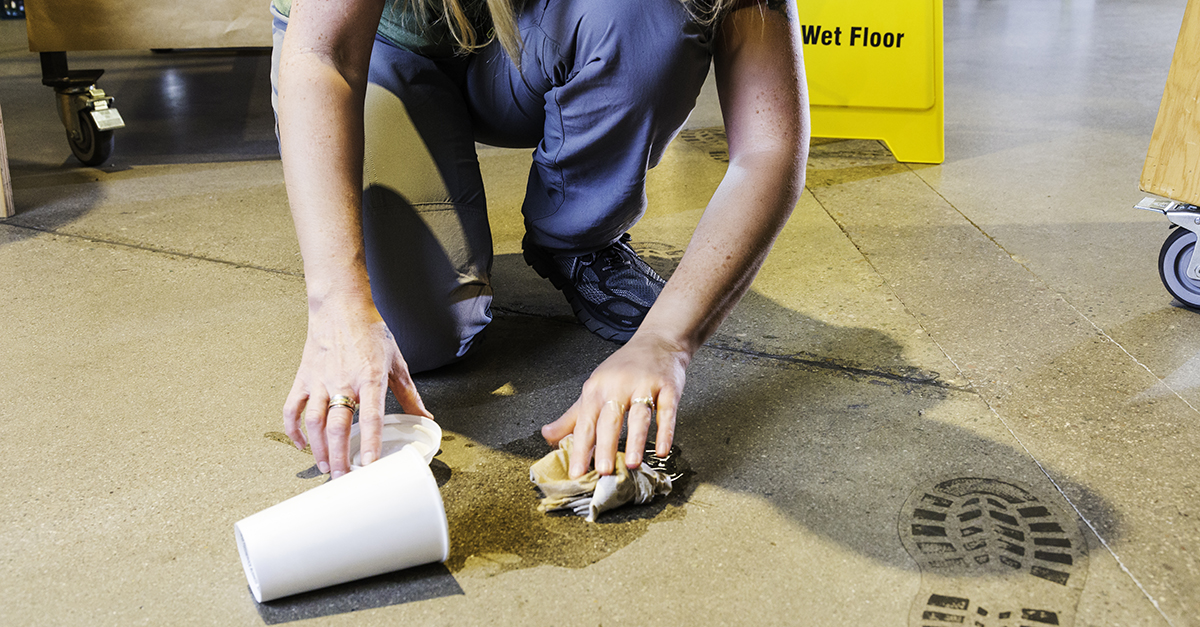
- Respond quickly to spills. Spills that are left to sit may spread and set. Take prompt action to remove them.
- Use appropriate equipment. Efficient filtration (preferably through a validated filter system) helps capture fine particles and reduces the chance of redistribution into the air during cleaning.
Well-managed floor-care protocols that genuinely support a cleaner, healthier indoor environment must include the following practices:
- Allergen removal: Crews must effectively remove allergens during routine cleaning.
- Airborne control: Crews must take care that cleaning does not significantly increase airborne allergen levels.
- Particle management: Cleaning methods must not reintroduce fine particles into the air.
- Containment: The cleaning system must capture contaminants rather than redistribute them.
Procurement decisions play an important role, particularly as expectations around indoor environmental quality continue to grow. Those responsible for procurement must be well informed and supported if they are to respond effectively to growing occupant demand for better-performing indoor environments.
When choosing flooring, facility managers should not rely on terms such as “low emission” or “hypoallergenic” as they are often used broadly and can be difficult to verify in practice. Third party certification and standards-based evaluation provide a more consistent way to assess how flooring will perform, particularly in relation to emissions, cleanability, and the management of dust, allergens, and fine particulate matter over time.
For facility teams, reliance on these certifications can help reduce uncertainty, support more informed specification choices, and contribute to meeting recognized industry standards such as the U.S. Green Building Council’s Leadership in Energy and Environmental Design (LEED) and the International WELL Building Institute’s WELL Building Standard.
Combine characteristics with cleaning
Whether flooring is high-performance depends on how its materials behave, how they respond to cleaning, and how well they hold up over time.
Flooring characteristics such as low-emission materials, cleanable designs, hybrid systems, and modular flooring continue to play a central role in ensuring a clean and healthy indoor environment. In addition, new technologies such as treated textile systems are expanding flooring capabilities. What really matters is how flooring performs in day-to-day use. Flooring has a direct impact on how easily facility managers can maintain a space and reliably meet cleaning standards.
When the right flooring is in place and properly maintained, it becomes easier for cleaning crews to manage dust, allergens, and fine particulate matter, allowing them to maintain consistent indoor environmental quality in busy, high-traffic buildings.