Technology can be our friend when we know our goals and can afford the tools that help us reach them. For example, our smartphones help us communicate, provide access to the internet, and perform many tasks via apps. While expensive up front, they are often bundled with service packages.
Likewise, “intelligent” cleaning technology can help cleaning professionals if they are mindful about what they expect this technology to accomplish and can afford it, whether through a direct purchase or bundled in a service agreement.
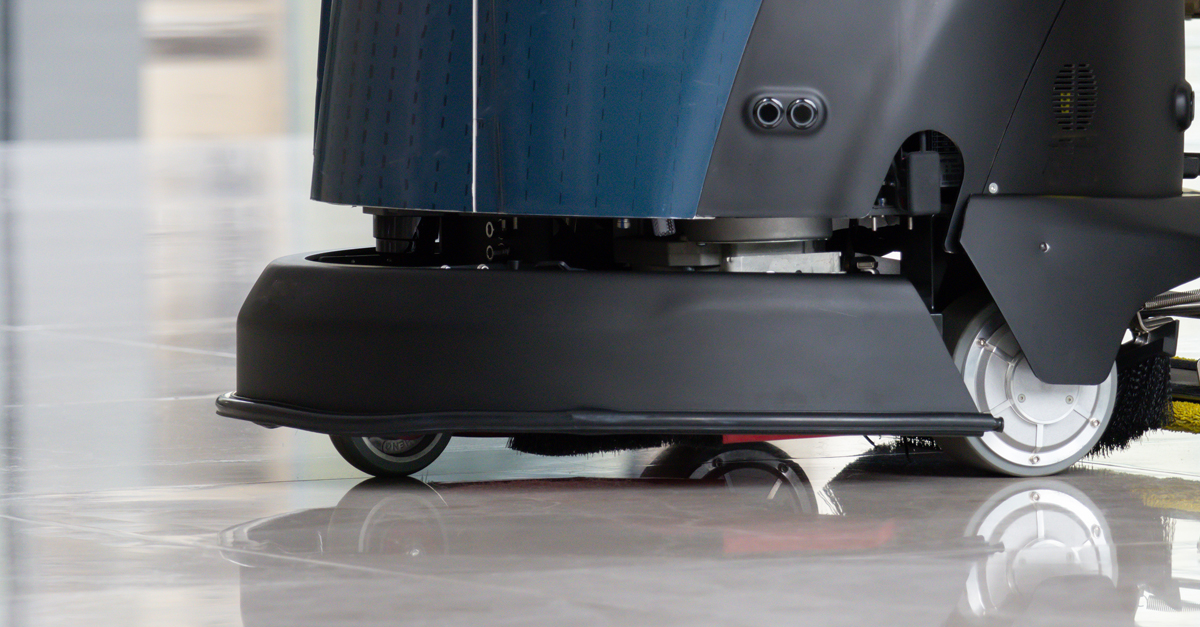
Since customer service is a key differentiator for building service contractors (BSCs) and in-house service providers (ISPs), robotic vacuums and autonomous floor scrubbers that handle repetitive and labor-intensive functions can free up human resources for more customer-focused activities, turning cleaning automation into a strategic advantage.
Make time for the human touch
The initial “customer” for robotic technology is the cleaning worker. Artificial intelligence and intelligent machines can save these workers time that can be diverted to their training and career development. In a 2009 study, the International Facility Management Association found that for each dollar spent on training, organizations reported receiving an average of US$3.95 in benefits to both internal and external customers, a four-to-one return on investment.
In the customer service realm, smart technology can also provide staff with more time for greeting customers and addressing their needs, providing personalized recommendations or assistance, promptly resolving issues or complaints, and ensuring customers have a positive experience. Cleaning professionals will also have more time to spend on quality checks and engaging in follow-up communications to enhance overall satisfaction.
Customer-focused activities, such as personalized service, prompt issue resolution, and proactive engagement, can positively impact profitability. Studies have shown that organizations investing in enhanced customer experiences often see increased customer loyalty, higher retention rates, and more positive word-of-mouth referrals, all of which contribute to greater revenue and profit margins. By reallocating staff from routine cleaning tasks to these value-added interactions, businesses are likely to see improvements not only in customer satisfaction but also in their bottom line.
For example, a study, The Value of Customer Experience, Quantified, published in a 2014 issue of Harvard Business Review, found that companies prioritizing customer experience saw revenues increase by up to 10% to 15% within three years. Similar research, Customer Loyalty: The Hidden Engine of Growth, published by Bain & Company, demonstrated that businesses excelling in customer service achieved retention rates 5% to10% higher than their competitors, directly correlating with greater long-term profitability. Another study, The ROI of Customer Experience, by the Temkin Group, showed that organizations with strong customer engagement programs experienced double the loyalty scores compared to those with less emphasis on customer-focused interactions.
Remember the goal
Despite all the advantages of robotic cleaning equipment, there is still a need for caution to be sure the machines are truly doing the job you purchased them for—cleaning.
For example, although robotic vacuum cleaners are quite capable of maintaining the appearance of carpet, there are often performance tradeoffs inherent in the smaller machines as they may lack the deep-cleaning ability of full-sized units.
It’s easy to confuse the appearance of carpet with actual cleanliness. Robotic units can appear to clean carpet yet leave embedded soil behind. These soils can scratch, dull, and wear carpet fibers. Foot traffic can drive them airborne, affecting indoor air quality (IAQ).
Notably, the Carpet and Rug Institute does not offer its Seal of Approval—covering soil removal, IAQ, and carpet wear aspects—to any robotic vacuums, yet.
Consider all aspects before purchase
In addition to whether they’re up to the task of cleaning, there are other factors to consider regarding robotic equipment. Initial investment costs for intelligent cleaning equipment can be high, making it less accessible for smaller organizations.
Additionally, robotic systems may face challenges in adapting to complex or cluttered environments, potentially requiring human intervention for certain tasks. While the oldest models utilize bump-and-go navigation, the newest ones use light detection and ranging (LIDAR), which is now popular in self-driving cars as it enables navigation even in the dark. Some models combine LIDAR with simultaneous localization and mapping (SLAM), adding cameras for visual navigation.
Maintenance and technical issues can also arise with this equipment, leading to downtime and the need for specialized support.
These factors can offset some of the efficiency gains and require organizations to carefully assess the long-term value and reliability of robotic cleaning solutions.
Despite these challenges, technology can still be our friend, when we know our goals and choose tools that are as helpful as our smartphones.