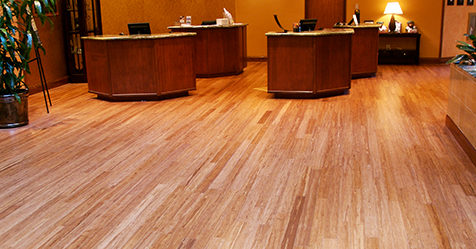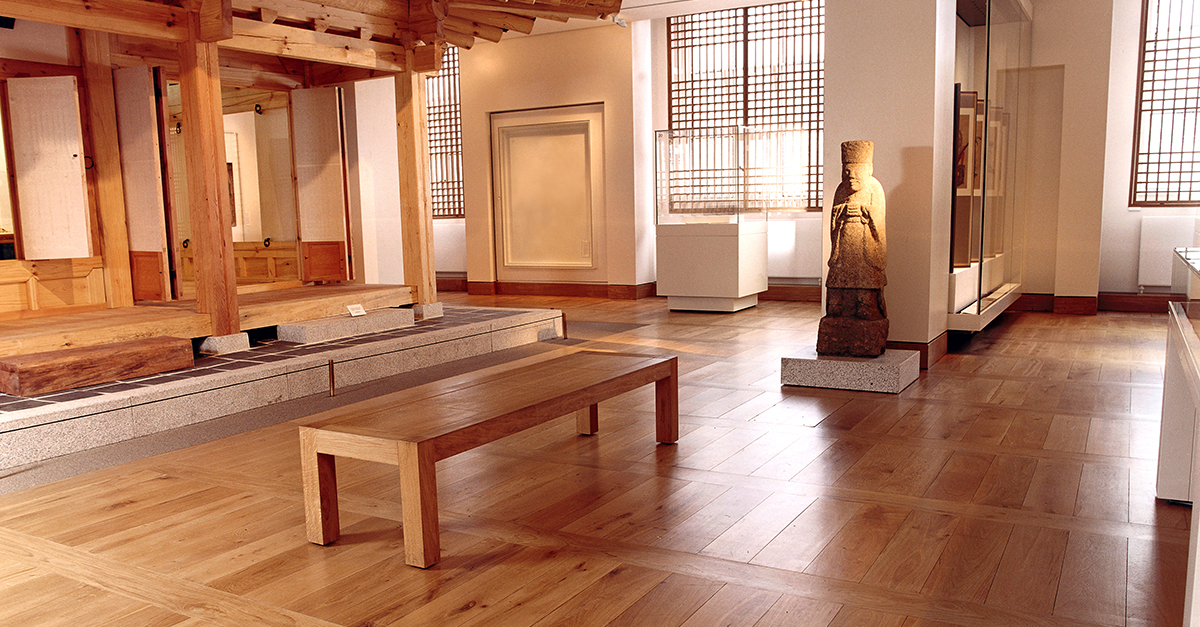
Building service contractors (BSCs) pride themselves on their ability to care for a variety of hard flooring types, mainly the resilient flooring common in commercial buildings, schools, healthcare facilities, and other buildings that require durable flooring. But occasionally they will encounter a flooring type more common in past decades—wood floors.
“Wood floors are typically found in older, historical buildings, such as churches,” said Todd Weyhmiller, director of Product Management Professional & New Initiatives for Bona. “You’ll also find it in restaurants and bars, such as traditional Irish pubs.”
“It is unusual to encounter wood floors in commercial buildings,” said Shari Cedar, CEO and co-owner of AK Building Services. “But aside from older, historic buildings, you will find them at community centers, often as parquet sports floors or dance floors.”
Gaining knowledge and confidence in wood floor care can give BSCs an advantage when jobs come up in buildings with this niche flooring.
Know your enemies
While all flooring types have their adversaries, public enemy No. 1 of wood floors, according to Jesse Cash, vice president of operations for AK Building Services, is grit.
“The biggest challenge is stopping grit from causing a sandpaper effect and wearing down the sealant on wood floors,” he said.
When wood floors are located at the entry points in buildings, you are more likely to be constantly fighting grit, dirt, and other debris, Weyhmiller added. “That debris coming from outside is a big danger to wood floors,” he explained. “It’s ground into the floor, causing scratches and premature wear. If this debris is not removed on a regular basis, it is difficult for a floor to withstand its effects.”
Other enemies include previous floor care crews who might have treated the wood as if it were resilient flooring and inadvertently damaged it. Heavy foot traffic, which wore the wood down, and furniture that scratched it also contribute. Moisture rounds out the enemy list. “A string mop and a big bucket of water are a no-no,” Cedar said.
Sunshine is on the frenemies list. Sunlight streaming through a clean room is a welcoming sight, unless your wood floor isn’t spotless, and especially if it is stained a dark color.
“A floor does not lie,” Cedar remarked. “It can look beautiful and then the afternoon sun comes in and highlights every speck of dust.”
Prepare for daily battle
Daily dry mopping will help preserve wood floors. “Don’t be afraid to do it too much,” said Weyhmiller. “The more you dry mop and dust, the better it will be for your floor.”
Cash added that the environment and weather may necessitate frequent dry mopping. “If you are in a beach environment, you will need to dry mop far more frequently than for an office environment,” he explained.
Weyhmiller recommends using microfiber dusting pads or mops, either disposable or reusable. “But with reusable ones, you have to maintain them,” Weyhmiller warned. “When the pad or mop head is brand new, it is very effective. But if you never clean it and you have a dirty pad, you are probably just pushing dirt around.”
Follow up dry mopping with wet mopping. You can wet mop daily under certain conditions, such as after a spill or in winter when people are tracking ice melt indoors. “The chemicals in ice melt can have adverse effects on wood floors, so you should do more than dry mop to remove them,” Weyhmiller said.
However, in regular conditions, wet mopping once a week is usually sufficient. “You’ll want to use a flat microfiber mop and the least amount of water as possible,” Cedar advised. “A string mop will spread too much water.”
“Water is the enemy of wood,” Cash explained. “If you leave too much on the surface, it can cause the floor to swell and buckle.”
Use a cleaner that is specifically designed for wood when wet mopping. “Go with a water-based cleaner rather than something alcohol-based,”
Weyhmiller said. “I would always start with a cleaner recommended for wood floors. If you’re not sure if the cleaner is safe for wood, or if your company wants to limit the number of cleaners it stocks, stick with a pH-neutral cleaner.”
Weyhmiller does not recommend cleaning wood floors with vinegar or other natural cleaners unless they are specifically labeled as safe for wood.
“If the vinegar is highly diluted, it is not a risk in the short run, but you have to watch the dilution,” he explained. “If you use too much vinegar, you end up with a strong acidic solution that can dull the finish and etch the floor. I’d recommend staying away from it.”
Guard against stains and scratches
When wood floors have stains or deep scratches, you’ll need to move beyond wet or dry mopping.
“The treatment will depend on the stain, but if something is stuck on the surface, such as gum or a melted substance, you can wipe it with a solution of cleaner and warm water, then use a razor blade to lightly scrape it,” Weyhmiller said. “What you don’t want to do is get aggressive with scrubbing; you can remove or dull the finish.”
Wood floors are coated with a protective urethane finish. “Most finishes have really good stain resistance, and everyday spills won’t affect them,” Wehymiller explained. “But if the spill is sitting there a long time and goes into the finish and into the boards, there is not much you can do other than calling a professional to do a spot repair.”
Sealing wood floors with a urethane finish every year—or every six months in especially high-traffic areas—can help protect them from scratches, Cedar said. “You can buff out the light scratches, but for a deep scratch, the only thing you can do is sand and refinish the floor,” she said. “That’s why it’s important to guard against scratches by putting protective caps on chair legs and wheels and putting mats under desks.”
“Nothing is permanent in protecting wood floors from scratches; it all comes with risks,” Cash said. “Sealing floors can lead to moisture trapped in the wood. It all comes down to janitorial work rather than restoration. Keep up with low-moisture mopping, and I highly recommend walk-off mats to get as much grit as possible off people’s shoes.”
Weyhmiller said a matting system will only protect floors if you properly care for it and place it in the correct areas. “Clean it and replace it as needed, otherwise it can’t do its job,” he said. “It is critical for entrance areas, but once you are deeper into the building, there is minimal benefit to just throwing down a mat.”
Eventually, despite your best protective practices, you’ll need to refurbish a wood floor. A light refurbishing entails lightly abrading it—not taking it down to the bare wood—and recoating it. Weyhmiller said this practice is common with gym floors.
A complete refurbishment entails sanding the floor down to the bare wood, then staining and sealing it. The number of times you can refurbish a floor depends on whether it is solid or engineered wood.
“Older wood floors, 50, 60, or 70 years old, tend to be solid wood, and they can be refinished, five, six, seven times before you go through the wear level,” Weyhmiller explained. “Engineered wood floors have a thin veneer of wood. You need to consult with someone to determine if it is a candidate to be refinished.”
Remain vigilant against ambushes
Common misconceptions and mistakes can ambush the best floor care plans, leading to inefficiencies and even damage. Although it is good practice to avoid too much water when cleaning wood, that doesn’t mean you should avoid it altogether. “You can be so afraid to use water that you don’t use enough moisture to get the job done,” Weyhmiller said.
Just as getting the amount of water wrong is a problem, so is using too much cleaning chemical. “Less is more,” Cash said. “Let the water be the solution that works, not the chemical.”
Skipping the dry mopping step is also detrimental to cleaning. “Sometimes people think they can wet mop and be done,” Cedar said. “But you must always sweep with a dry mop before you clean with a wet mop, otherwise you’re just moving the dirt around.”
Don’t rule out vacuuming wood floors. “Microfiber dust mop first, then you can use a general tile vacuum,” Cash said. “But don’t use one with a beater bar, just straight suction.”
Know when to call a truce
Although a wood floor is an uncommon find in day-to-day BSC services, having the expertise to care for it—and the good judgment of knowing when to call in the experts—will make you a valuable commodity to your clients. Proper care of wood floors will ensure the serviceability of activity areas and preserve the beauty of historical buildings.
“The key takeaway is your wood floor will love you as much as you love it,” Cash said.