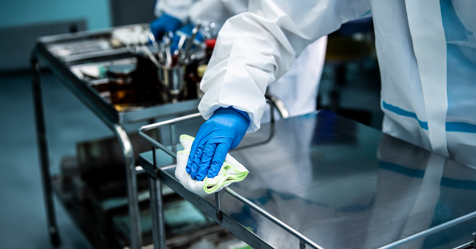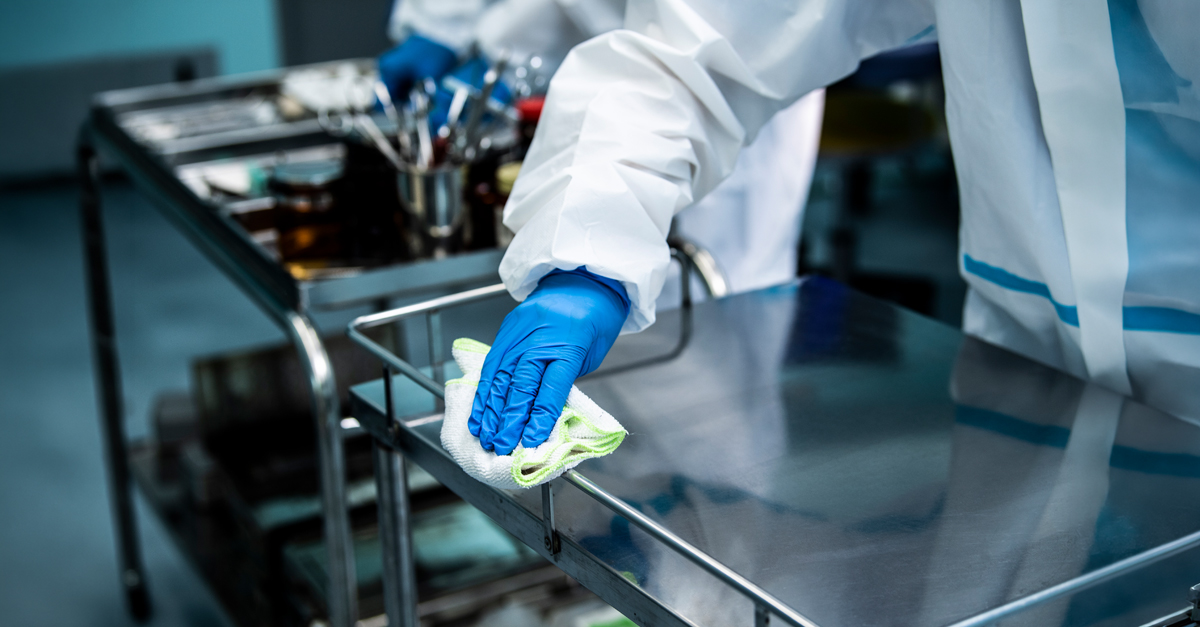
Improperly disinfected surfaces in healthcare settings remain a major contributor to healthcare-associated infections (HAIs). Despite guidance from training, backed by extensive scientific data detailing which disinfectants eliminate harmful pathogens, surface contamination continues to challenge infection prevention efforts.
Disinfecting a surface effectively is far more complex than it appears. Multiple clinical studies and forums have revealed best practices in the selection and use of disinfectants to eliminate pathogens successfully, including the SARS-CoV-2 coronavirus, from surfaces. Successful disinfection begins with understanding surface disinfection compatibility.
Incompatibility causes damage
The simplest definition of surface disinfection compatibility refers to whether a particular disinfectant can be safely and effectively used on a specific surface material. Many disinfectants degrade or damage common healthcare surfaces. Over time, this damage creates microscopic cracks, pits, and fissures that form microbial reservoirs where microbes can hide and multiply, safe from the biocides used to destroy them.
When disinfectants compromise a surface, they unintentionally create environments that protect microorganisms instead of eliminating them. Microscopic damage allows pathogens to attach, grow, and transfer to other surfaces, patients, and healthcare workers.
The systemic gaps at play
Although surface damage begins on a microscopic level, its consequences increase quickly. The healthcare industry currently faces several systemic gaps that make managing surface disinfection compatibility difficult:
- Lack of mandatory testing standards. Regulations that require surface materials or products to be tested for compatibility with disinfectants prior to use in healthcare are nonexistent.
- Lack of standardized cleaning or disinfection guidelines. Without benchmarks, it’s nearly impossible to validate whether surfaces can withstand repeated exposure to hospital-grade disinfectants. While all healthcare facilities provide cleaning and disinfection guidelines in infection prevention protocols, these guidelines often conflict with manufacturer instruction for use (IFUs) or directions for use (DFUs).
- Inconsistent manufacturer (IFUs/DFUs). Care and maintenance guidelines are often written for nonclinical environments and fail to reflect the realities of healthcare use.
- Design-phase disconnects. Healthcare facilities are not built for cleaning and disinfection. Facility leaders routinely select surfaces and products for healthcare environments without considering the manufacturer instructions for use or without thoroughly reviewing the testing, validation, and compatibility data.
These gaps not only make it difficult to ensure that surfaces remain both cleanable and safe over time, they create problems with serious financial and clinical consequences.
Study examines real-world impacts
A recent case study co-published by the Health Surfaces Institute (HSI), a division of ISSA, and the Association of Healthcare Value Analysis Professionals found a link between disinfectants and surface damage. A large Midwestern hospital discovered that the bleach-based disinfectant outlined in its infection prevention and control protocol was damaging a commonly used medical device. The disinfectant was incompatible with the device manufacturer’s validated cleaning instructions leaving no compliant option for disinfection.
As a result, the hospital incurred more than US$4 million in repair and replacement costs within two years of purchasing the medical device, and the device manufacturer incurred $140,000 in testing and replacement costs. Additionally, regulatory agencies fine healthcare facilities if they don’t follow IFUs/DFUs, and these fines can be substantial. Beyond the financial burden, the situation posed ongoing patient safety risks due to repeated use of damaged medical devices.
Moving toward a solution
ISSA Healthcare and the HSI are addressing surface disinfection compatibility challenges head-on. ISSA Healthcare’s testing and validation task force has developed a patented test method for validating surface disinfection compatibility for plastics, which will be implemented into a testing program currently under development. This program will set new benchmarks for validating surface disinfection compatibility—helping facility managers, designers, and manufacturers make informed decisions to ensure cleanability before purchasing healthcare materials and products, thus reducing infection risks for patients and staff.
Stay Informed
To follow updates and learn more as certification programs launch, sign up for the Healthcare Surfaces Institute’s newsletter at issa.com/healthcare.