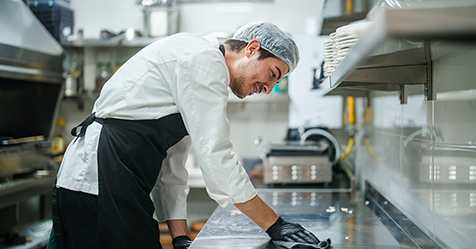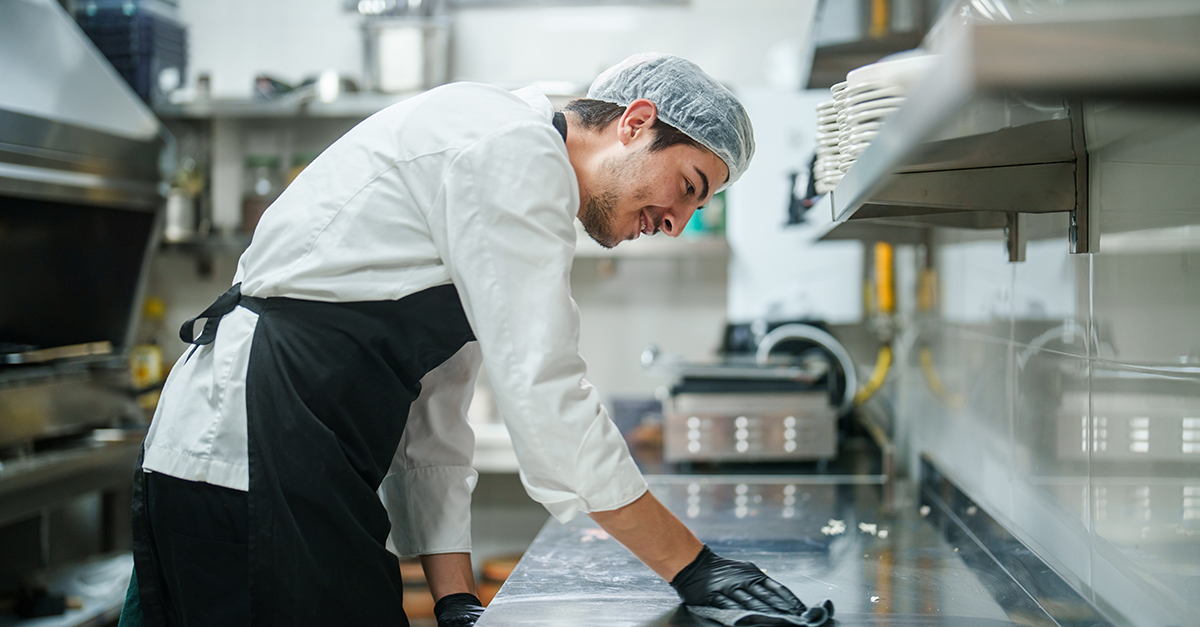
Today’s food service and hospitality operators are expected to deliver clean, welcoming environments continually regardless of who is on the housekeeping schedule. As labor shortages continue to reshape day-to-day operations, cleaning programs must perform efficiently, even when teams are stretched thin. According to the National Restaurant Association, 77% of operators said recruiting and retaining employees is a significant challenge, and nearly eight in 10 who were understaffed said it limited their ability to succeed.
At the same time, expectations for cleanliness have only increased. Since the pandemic, consumers have become more aware of food safety, sanitation and infection risks, while highly publicized foodborne illnesses continue to keep these issues in the spotlight. As a result, operators face growing pressure to maintain clean, sanitized environments while delivering a positive guest experience. Meeting those expectations requires cleaning programs that are designed for today’s lean workforce.
The most effective cleaning programs recognize an important reality: When staffing is limited, complexity becomes the enemy of consistency.
Simplify to improve compliance
Efficiency begins with ease. Every additional step in the cleaning process creates another opportunity for delays, errors or missed tasks. Traditional cleaning methods often require employees to mix concentrated chemicals, monitor dilution ratios, maintain buckets and ensure reusable cloths are properly laundered and used. Each step consumes valuable time and requires additional training.
Simplified workflows reduce that burden. Ready-to-use cleaning and disinfecting products, for example, eliminate the need to mix concentrates, measure water temperatures and prepare sanitizer buckets. Staff can focus on what needs cleaning and when, rather than how to prepare the cleaning solution correctly.
For facilities experiencing frequent turnover, reducing process complexity can also shorten training time and help new employees become productive more quickly.
Avoid common cleaning missteps
When teams are rushed, shortcuts often become routine. One of the most common mistakes is continuing to use sanitizer solutions beyond their recommended lifespan or failing to verify that the proper concentration has been achieved. Even when automated dispensing systems are used, dilution levels may not always be accurate, making routine verification essential.
Another often-overlooked issue involves microfiber cloths. Many operators are unaware that certain microfiber materials can bind quaternary ammonium compounds (quats), absorbing the active disinfectant from the solution. The result is a cloth that contains much of the disinfectant while the remaining solution may have little sanitizing capability.
Cross-contamination presents another challenge. Multiple sanitizer buckets prepared at different times throughout the day, reusable cloths moving between surfaces and inconsistent replacement practices all increase the risk that contaminants will be spread rather than removed. Standardized cleaning methods help reduce these variables and improve consistency.
Consider training needs
High employee turnover means operators should design cleaning programs with training in mind. Lengthy or complicated cleaning procedures demand additional time from both trainers and new hires.
Simpler processes allow organizations to focus training on the fundamentals: what to clean, when to clean it and how to follow proper contact times and safe cleaning practices. Eliminating unnecessary preparation steps reduces complexity, making procedures easier to learn, remember and perform consistently.
Ease of use also affects employee satisfaction. When cleaning tools are intuitive and readily available, staff spend less time preparing to clean and more time completing the work that protects guests and employees.
Make consistency the goal
The goal of any cleaning program should be simple: make it easy for employees to perform every step, correctly and safely, every time. Standardized processes create consistency across shifts and among employees with varying levels of experience. They also make it easier for supervisors to monitor compliance and reinforce best practices. Whether cleaning occurs during busy peak periods or slower hours, staff should follow the same procedures with the same expectations.
Consistency also supports food safety by reducing opportunities for cross-contamination and ensuring that disinfectants and sanitizers are used according to their label instructions.
Build a realistic program
Designing a successful cleaning program begins by accepting that staffing constraints are unlikely to disappear. Instead of expecting employees to do more with increasingly complex procedures, operators should focus on removing unnecessary steps while maintaining cleaning effectiveness.
An effective program should:
- Standardize cleaning procedures across every shift.
- Minimize preparation steps whenever possible.
- Incorporate cleaning and disinfecting solutions that are effective and easy to use consistently.
- Emphasize proper training and ongoing competency.
- Reduce opportunities for cross contamination.
- Ensure products are registered by the Environmental Protection Agency (EPA), used according to label directions and are appropriate for the surfaces being treated.
- Balance efficiency with efficacy rather than sacrificing one for the other.
Ultimately, the strongest cleaning programs are built around the people expected to carry them out. When processes are straightforward, consistent and practical for busy front-line employees, compliance improves naturally. In an industry where staffing challenges remain a constant, simplifying cleaning workflows may be one of the most effective strategies operators can adopt to protect guests, support employees and maintain a safe environment.