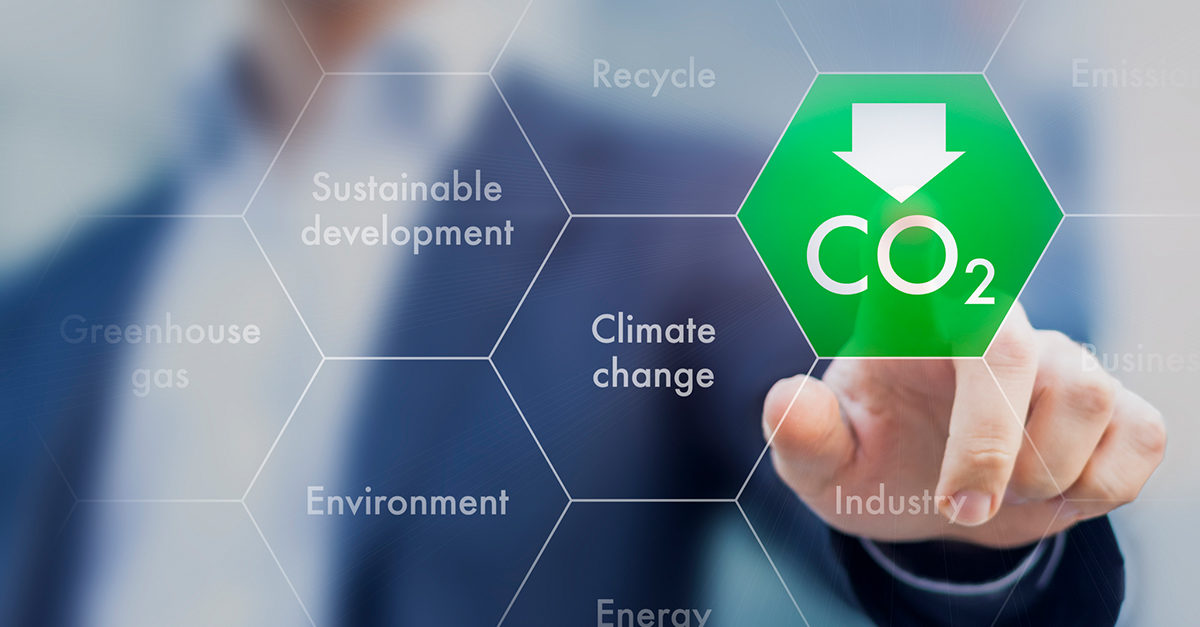
In September 2016, the world hit a little-known historic milestone, officially passing the mark of 400 parts per million (ppm) of carbon dioxide (CO2). This was during a time of year when CO2 in the atmosphere is usually at its lowest because plants suck it up and replace it with oxygen.
A safer level of CO2 in the atmosphere is around 350 ppm, but we may never dip below this 400 ppm mark again in our lifetimes, according to some scientists. This is an ominous sign for our future and especially our children’s future. Experts agree this new high level sends a clear signal that the world must take steps now to reverse this trend.
A Look at Our Past
Since the Industrial Revolution began in the early 1800s, more CO2 has been entering the atmosphere than vegetation has been able to absorb and replace with oxygen. As a result, little by little and for more than 200 years, we have been adding CO2 into the atmosphere, which has increased much faster in just the past couple of decades.
This increase in CO2 is what many scientists believe is behind climate change and unusual weather patterns around the world. For example, Chicago enjoyed nearly 70-degree temperatures in February when normally the temperature is around 35 degrees or colder this time of year.
The Importance of Greenhouse Gas
You have likely heard of greenhouse gases, and it’s important to understand that they are not inherently bad. In fact, without greenhouse gases, our earth would be about zero degrees Fahrenheit and frozen solid—not very hospitable to human life. But if we had too many greenhouse gases in our atmosphere, our planet could become like Venus, which is about 850 degrees Fahrenheit.
CO2 is the most important gas for controlling the earth’s temperature. CO2 in our atmosphere absorbs heat from the sun and then emits it to heat the surface of our planet. Because of this function, CO2 is categorized as a greenhouse gas.
What Can We Do?
Even if all the CO2 and greenhouse gases entering the atmosphere were to stop today, the damage will linger for decades to come. But this does not mean we should just throw in the towel and give up. Our survival as a species depends on us taking action now to reduce our CO2 emissions.
For example, the amount of CO2 released into the atmosphere by China, one of the world’s worst offenders, has actually declined since 2015. This is because China is generating more electricity from renewable energy sources, and is no longer so dependent on coal.
The United States gets a gold star. The country now leads the world in reducing CO2 emissions. It has embraced renewable energy sources since about 1965, and its dependence on coal has been slowly declini
These issues may feel far beyond what we can do individually; however, there are steps our organizations can take to take to slow the rising levels of CO2:
- Add trees to your facilities’ landscaping.
- Select fuel-efficient vehicles to transport employees and equipment to client sites.
- Reduce facility waste by buying supplies in bulk or generating cleaning solutions on site to reduce product packaging.
- Conserve water; don’t leave faucets running or consider installing more sustainable restroom fixtures, such as low-flow toilets.
Finally, know the real facts. There are no “alternative facts” when it comes to global warming. It is real, and there is science and research to back it up.