In 2026, one would be hard-pressed to avoid headlines asserting that artificial intelligence is moving from “pilot to production” across industry after industry. The technology has advanced, trust (from a business lens) has increased, and objections have fallen one by one as organizations witness their peers’ deployment scale and fear the cost of being left behind.
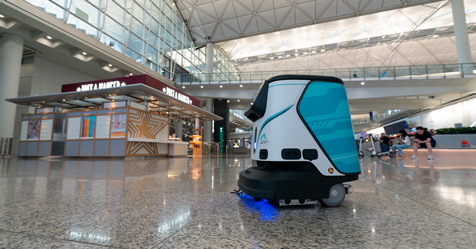
For facility managers and building service contractors (BSCs), the same is quickly becoming true for cleaning robotics. This year is likely to see more large-scale adoption of autonomous solutions than any year prior. Three trends define where robotics stands today and where the technology is going.
1. The move from consideration to necessity
Even just a few years ago, autonomous cleaning equipment occupied a cautiously optimistic corner in the minds of facility managers. Something to pilot, evaluate carefully, and perhaps circle back to in a future budget cycle. But a few key factors have converged to push cleaning robotics firmly into the mainstream today.
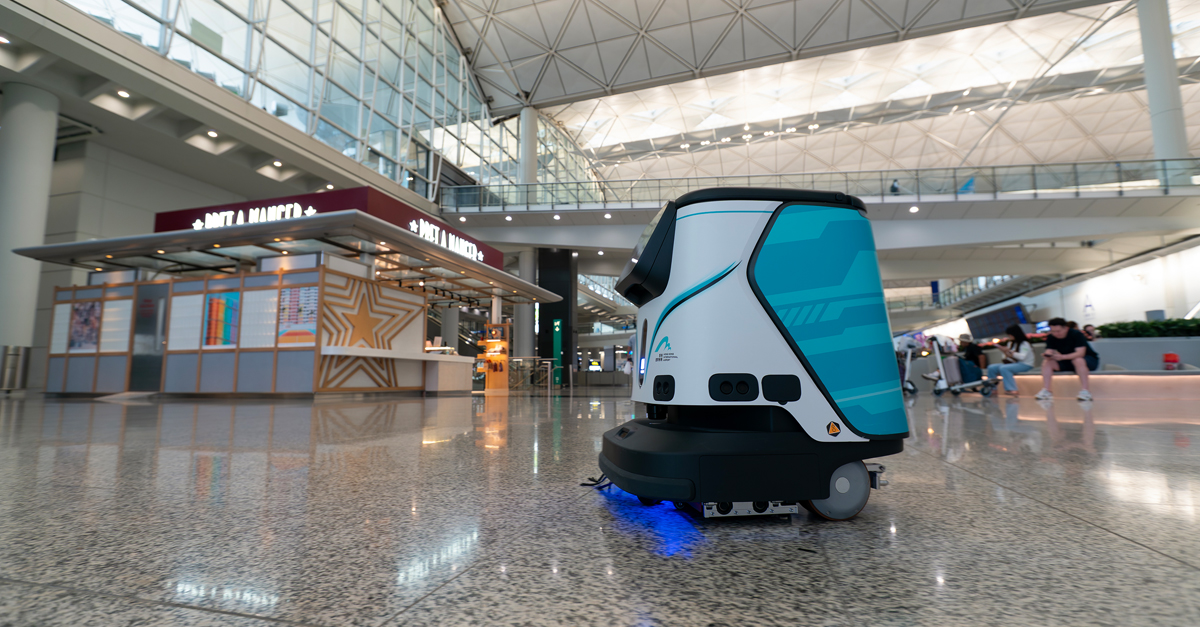
Safety concerns that once made teams hesitant—particularly in retail and mixed-use spaces—have largely been diminished by considerable improvements to the underlying technology. Obstacle detection and machine response have both made massive leaps. Some autonomous scrubbers can now deftly differentiate between fixed objects and moving ones (like people) and respond accordingly. That reliability, accumulated over years of real-world deployment, has done more to shift the consensus than any novel product demonstration could.
Word of mouth and social proof have also played a pivotal role. The cleaning industry is a tight-knit professional community, and when a meaningful share of teams in a given vertical are actively deploying autonomous equipment (and reaping the benefits), the competitive pressure to keep up is difficult to ignore. Additionally, the sharing of best practices across the same and other verticals has been a common theme, sponsored by industry experts, manufacturers and customers.
2. A shift from primary use to additional benefits
Every emerging technology goes through a form of metamorphosis. The first stage includes doubt, and maybe a dash of fear. Then, as the technology demonstrates its viability, people ask, “will this work for me?” And once the market has answered that question, the mindset shifts to “how can we integrate it even more into operations and how efficiently can it be realized?” We’ve arrived at that tipping point for cleaning robotics for a few reasons.
The persistent labor shortage that pushed many facility managers toward robotics initially remains acute. The Bureau of Labor Statistics projects roughly 350,000 annual openings for janitors and building cleaners through 2034, driven not by growth primarily, but by the need to replace workers leaving the field entirely. This is a structural churn that even the most glamorous recruitment effort can’t solve on its own. Robotics addresses this problem head-on and cleaning teams are embracing it. And by doing so, they’re finding that it surfaces more possibilities than just labor relief.
One of the more obvious benefits is data. Cleaning robotics collect performance data that trickles into broader facility analytics platforms: areas covered per shift, resource usage, maintenance intervals, and more. For cleaning teams that previously had little to no systematic visibility into cleaning operations, this information can enable smarter scheduling and more efficient resource allocation.
Beyond data, cleaning robotic technology is prompting facility managers to think differently about outcomes a cleaning program can achieve. With floor care running essentially on autopilot, staff are freer to address higher-value tasks that rely on the human element. Robotics handle volume and repetition; humans handle complexity.
Lastly, there is something commercially meaningful, though perhaps more difficult to quantify, about the general effect of a consistently clean space. Facilities that have transitioned from manual to robotic cleaning programs report that the difference in cleanliness is perceptible, not just to the people responsible for maintenance but to the people using the building. In environments like retail, corporate offices, and healthcare facilities where cleanliness represents safety and care, that perception speaks volumes.
3. Rising adoption among BSCs
BSCs have been among the slowest segments to adopt autonomous cleaning and for a fairly evident reason: labor is their chief offering. And if what you sell is labor, a technology that reduces the need for it looks less like an opportunity and more like a threat to the business itself.
But that way of framing cleaning robotics is deteriorating. BSCs are recognizing that differentiation has become a crucial competitive advantage and robotics is one of the clearest paths to it. More importantly, the operational logic of adoption is starting to click.
A BSC’s field structure has traditionally been organized around square footage and headcount—how many people it takes to clean a certain amount of space. Autonomous floor scrubbers turn that equation on its head. Now, with robotics handling routine floor care, a single field supervisor can oversee multiple locations rather than being anchored to one. That may be a fundamental shift from a tried-and-true model, but it also may be the sound of a door opening to a kind of growth that wasn’t available before.
Reading the market
The decline of extended pilot periods across the board may be the clearest signal of where the market stands. Facility managers who once spent considerable time proceeding gingerly are now skipping the pilot phase entirely, trusting the evidence the industry has already accumulated rather than feeling the need to generate it themselves. With the groundwork laid, the most useful question now is where to begin.