Facility managers in industrial buildings may be looking at their occupancy costs all wrong. Although industrial rent has increased significantly since the COVID-19 pandemic, it may not be too high—the ceiling’s height may be to blame. In a warehouse, clear height is fundamental to everything from inventory management to accounting.
What is clear height in a warehouse?
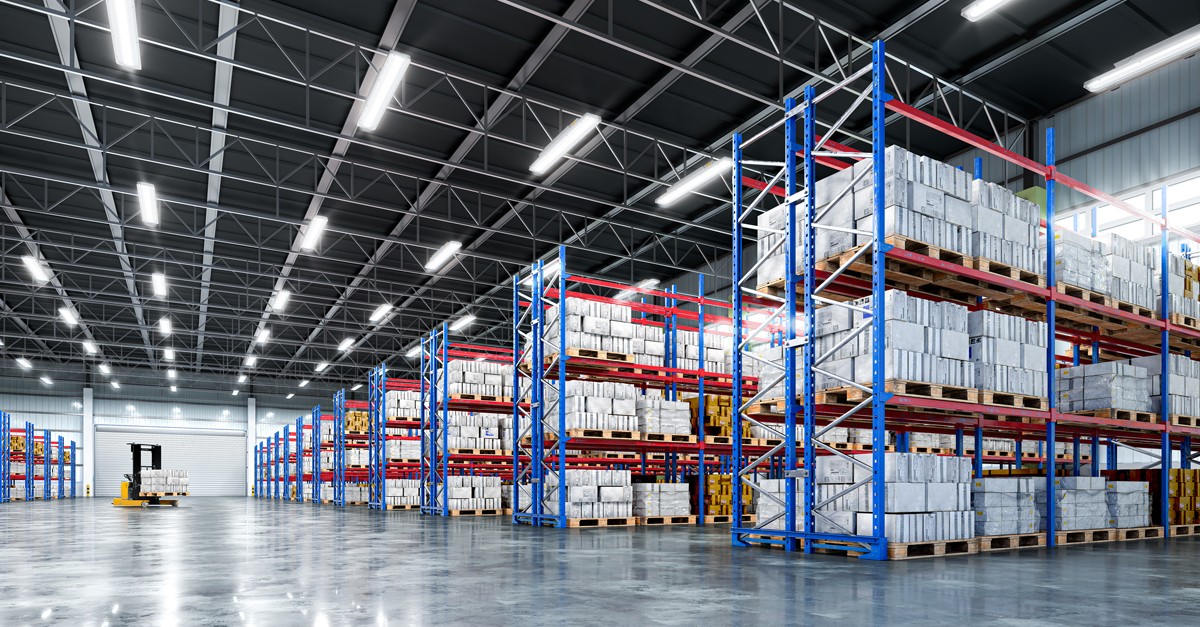
In a warehouse, the clear height is the distance from the finished floor to the lowest permanent overhead obstruction. This includes barriers such as ductwork, fire suppression systems, beams, and lights. It represents the maximum safe and usable height for racking systems.
Clear height differs from warehouse ceiling height, which measures the vertical space from the floor to the underside of the roof. Clear height dictates space utilization. For example, while a facility with approximately 10 feet of clear height can accommodate an automatic vertical lift module and a forklift easily lifts loads that high, 30 feet of clear height provides much greater flexibility for racking and equipment selection.
Rack height refers to the maximum height of storage racking, whereas stack height refers to the highest point at which warehouse workers can safely load goods. Facilities must also consider fire codes, load stability, and Occupational Safety and Health Administration (OSHA) requirements. If either rack height or stack height falls well below clear height, the facility is underutilizing its space.
How does clear height affect your rental rate?
Clear height is among the largest cost drivers for industrial rental rates because it directly correlates with facility capacity. The more usable cubic footage, the higher the rent. Although other factors are at play, this remains a useful rule of thumb.
Industrial rent rates surged during the COVID-19 pandemic. They have since stabilized but are still high. According to a 2025 report, the national average is $US8.76 per square foot, representing a 5.7% year-over-year increase. Paying over the average is acceptable for larger buildings, provided the space is fully utilized. Otherwise, facilities are overspending.
Warehouse clear height also affects labor costs—primarily those associated with sanitation. Workers cannot rely on mops and brooms alone to clean high-clearance areas. Instead, they need specialized high-reach cleaning equipment. Increased cubic footage also requires more time and labor to clean. For a 20,000-square-foot facility with four full-time custodians, costs could approach $200,000 annually.
However, all things considered, a low ceiling is rarely ideal. Cramped horizontal racking can disrupt cleaning workflows, reduce safety margins, and hinder efficient order picking. Disorganized layouts can inadvertently affect cash flow by contributing to delays. In this context, high clear height is valuable regardless of the facility’s size.
Other factors impacting your budget
In addition to clear height, several factors influence industrial rent. Some of the most prominent are building amenities, facility location, and proximity to urban areas. Buildings with climate control, smart security systems, loading docks, industrial racking, electric vehicle charging stations, or office space typically have higher rents than those with only basic features.
Company leaders typically target locations within a three- to five-mile radius of high-density customer concentrations. Proximity to dense urban areas enables a single facility to serve up to 100,000 households, which is enough to justify the capital investment.
Lease terms and market demand also affect rent. As vacancy rates rise, rents typically drop. However, vacancy-driven pricing is not immutable. During the pandemic, more companies competed for space, and the subsequent rise of artificial intelligence accelerated the proliferation of data centers. Lease terms—including durations and structure—can also vary widely.
How to maximize your cube utilization
Cube utilization refers to the total available space, not just floor space, utilized within a warehouse. Maximizing it entails optimizing and automating processes. Options include smart packaging, vertical racking, load planning, and automated storage and retrieval systems.
When building occupants outgrow their floor space, they can build up. Vertical racking maximizes a warehouse’s cubic capacity without requiring costly facility changes. Adopting a vertical approach from the start is more cost-efficient than expanding horizontally.
Vertical expansion is highly valuable across many industries. For example, vertical indoor farms can produce 10 to 20 times more per acre than conventional agriculture operations while using up to 90% less water. The efficiencies that arise from vertical layouts can streamline workflows, improve resource allocation, and enhance organization.
Space-saving advice for downsizing
In the facilities management industry, organizations often scale up to accommodate growing inventories. However, as industrial rental rates rise, downsizing can be a more affordable option. Decision-makers should consider right-sizing their warehouse to reduce costs while still meeting their service needs.
Maximizing vertical space is one of the most cost-effective solutions. By investing in stackable containers and modular racking, businesses can expand upward rather than outward, offsetting rising supply and rent expenses.
Regardless of facility size, space-saving vertical racking and retrieval systems can be highly effective. Other options include narrowing aisles for robot-based picking, reducing obsolete stock, implementing smart inventory management, and resizing oversized storage media with high-density alternatives.
Professionals should also consider floor load capacity and inventory velocity to ensure an optimized layout aligns with structural limitations and business needs. The 80/20 rule offers a useful guideline: the 20% of products that generate 80% of the revenue should be the most accessible.
Making the most of your vertical space
Cubic footage is more important than square footage, because a warehouse’s clear height directly influences inventory turnover ratios and cost-saving opportunities. With this perspective, identifying the right-sized facility at a reasonable rate becomes relatively straightforward.
Company leaders and facility managers should consider implementing changes during seasonal dips in market demand or temporarily relocating inventory during a redesign. Segmenting the facility into zones for phased renovations can help further minimize disruptions and delays.